

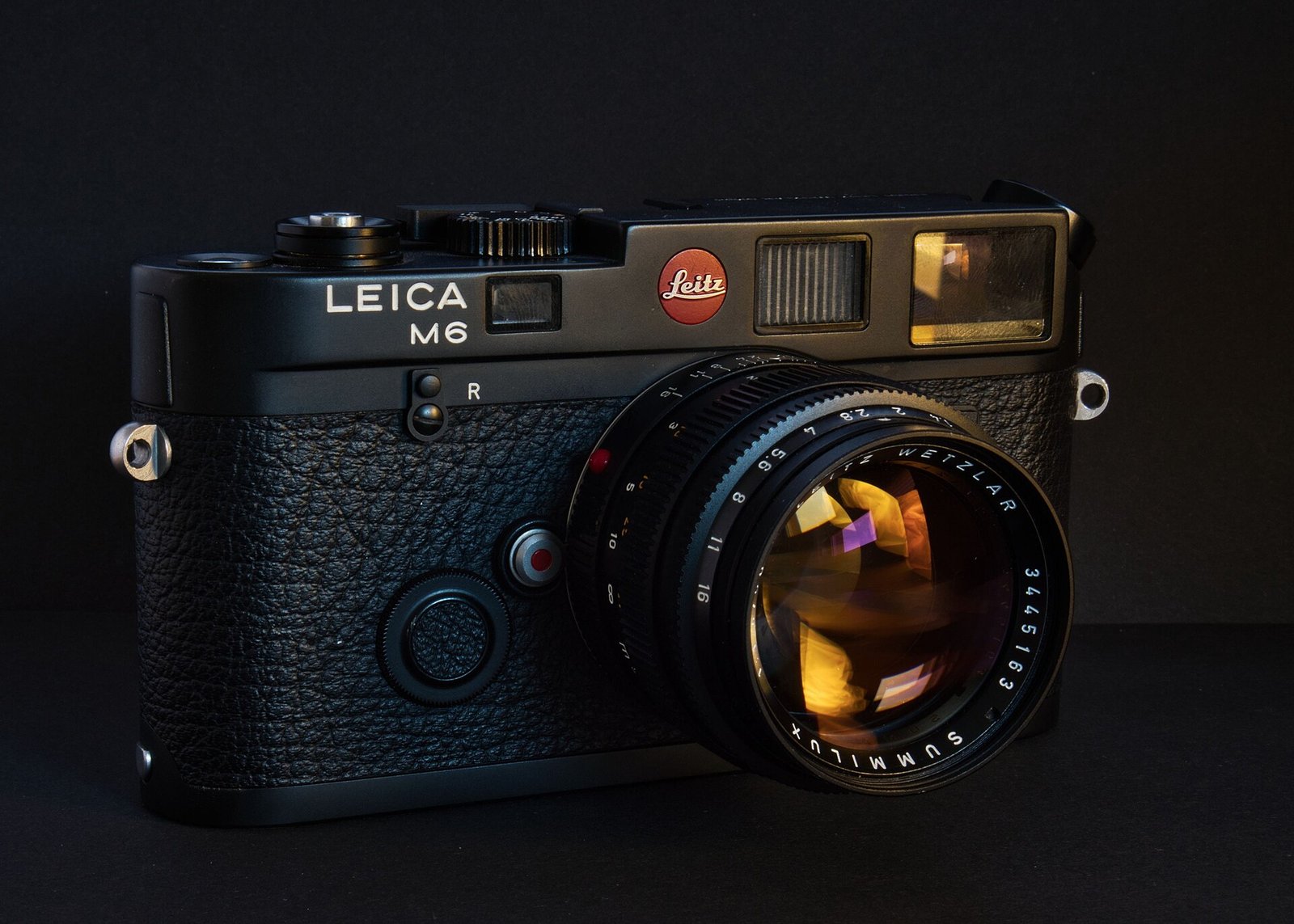
We counted the cameras 5ft.mag readers listed on their photos through November 19. Nine of the ten used most were first released more than 20 years ago. The Leica M3, in third place, dates from 1954. A well-maintained camera still shoots well today. But used cameras vary from one body to the next, even within the same model. Here is what to check before you buy, and in what order.
GUIDEUsed film camera checklist
Put in a battery, fire the shutter at every speed, then open the back and hold the light seals and lens up to the light.If you can't handle the camera, ask the seller for a test roll and the return terms. After you buy, check once more with a first roll.
- The ten cameras 5ft.mag readers use
- Five things to check in hand
- Automatic cameras: electronics first
- If you can't handle it, ask the seller
- After you buy: the first roll
- One-page summary
The ten cameras 5ft.mag readers use
As of November 19, 5ft.mag has published 6,755 reader photos. We grouped the 6,403 that list a camera by model and counted how many readers uploaded photos taken with each. A reader who uploads many photos counts once.
5ft.mag numbersAs of November 19
| Rank | Camera | Readers | Photos |
|---|---|---|---|
| 1 | Leica M6 | 18 | 474 |
| 2 | Leica MP | 16 | 260 |
| 3 | Leica M3 | 15 | 89 |
| 4 | Nikon F3 | 11 | 217 |
| 4 | Nikon FM2 | 11 | 149 |
| 4 | Pentax 17 | 11 | 139 |
| 4 | Rollei 35 | 11 | 100 |
| 4 | Minolta X-700 | 11 | 94 |
| 9 | Nikon F3HP | 10 | 137 |
| 10 | Canon EOS 5 | 8 | 63 |
Readers with the same count are ordered by number of photos. Different spacing or Korean and English spellings of the same model were merged into one. The Nikon F3HP is an F3 fitted with the DE-3 high-eyepoint finder, which shows the whole frame even when your eye is held a little back. It is counted separately, as readers listed it.
Only the Pentax 17 among the ten is a new model, first released in 2024. The other nine date from 1954 (Leica M3) to 2003 (Leica MP). Counting by photos changes the order. The Nikon F100 has 399 photos, the second most, but only three readers uploaded them.

Five things to check in hand
If you can handle the camera, in a shop or at a face-to-face sale, check in the order below. Bring a fresh battery that fits the camera and a small flashlight (your phone's will do). Be careful with a camera that has a big dent on the outside, since it may have been dropped. Smell it too, for cigarette smoke or mildew.
1. Battery and light meter
Open the battery compartment first. Green or white powder means the contacts have corroded. Light corrosion can be wiped off, but heavy corrosion keeps the camera from working properly. Put in a new battery and point the camera alternately at a bright window and a dark corner. The meter needle or LEDs should move with the light. Measuring the same spots with a light meter app on your phone is enough to tell whether it is badly off.
What the battery does varies by camera. The Leica M6 and Nikon FM2 use it only for the meter, so the shutter fires without one. The Minolta X-700 controls shutter speed electronically and has no mechanical speed that works without a battery. The Nikon F3's shutter is battery-driven too; without a battery it fires only at 1/60 sec. Which kind is the camera you are buying? Knowing that tells you whether to try the shutter without a battery first or to start with one installed.

Some older cameras use a 1.35V mercury battery for the meter. The first Rollei 35, which is on our ranking, used a PX625 mercury cell. The European Union banned their sale in 1991 and the United States in 1996, and they are no longer made. There are three substitutes. A zinc-air cell with the same voltage (such as the Wein Cell) is the closest but does not last long. There is also an adapter (MR-9) that lowers an LR44 battery's voltage to 1.3V. A 1.5V alkaline battery of the same size makes the meter read a little off. Kamerastore, a used camera shop in Finland, explains that with color negative film the difference barely shows in the photos.

2. Shutter and film advance
Fire the shutter once at every speed, from the fastest to the slowest. The sound should change each time you change the speed. 1/1000 sec should end faster than 1/500 sec, and 1/500 faster than 1/250. Look harder at the slow speeds, because shutters often stick there. Compare 1 second against a clock's second hand. On B, the shutter should stay open while you hold the button and close when you let go.
With the back open and the lens pointed at a bright spot, press the shutter and you can see the curtains open and close. Check that they move smoothly without catching. If the curtains are cloth, as on the Leica M6, shine your phone's flashlight on them to check for pinholes.
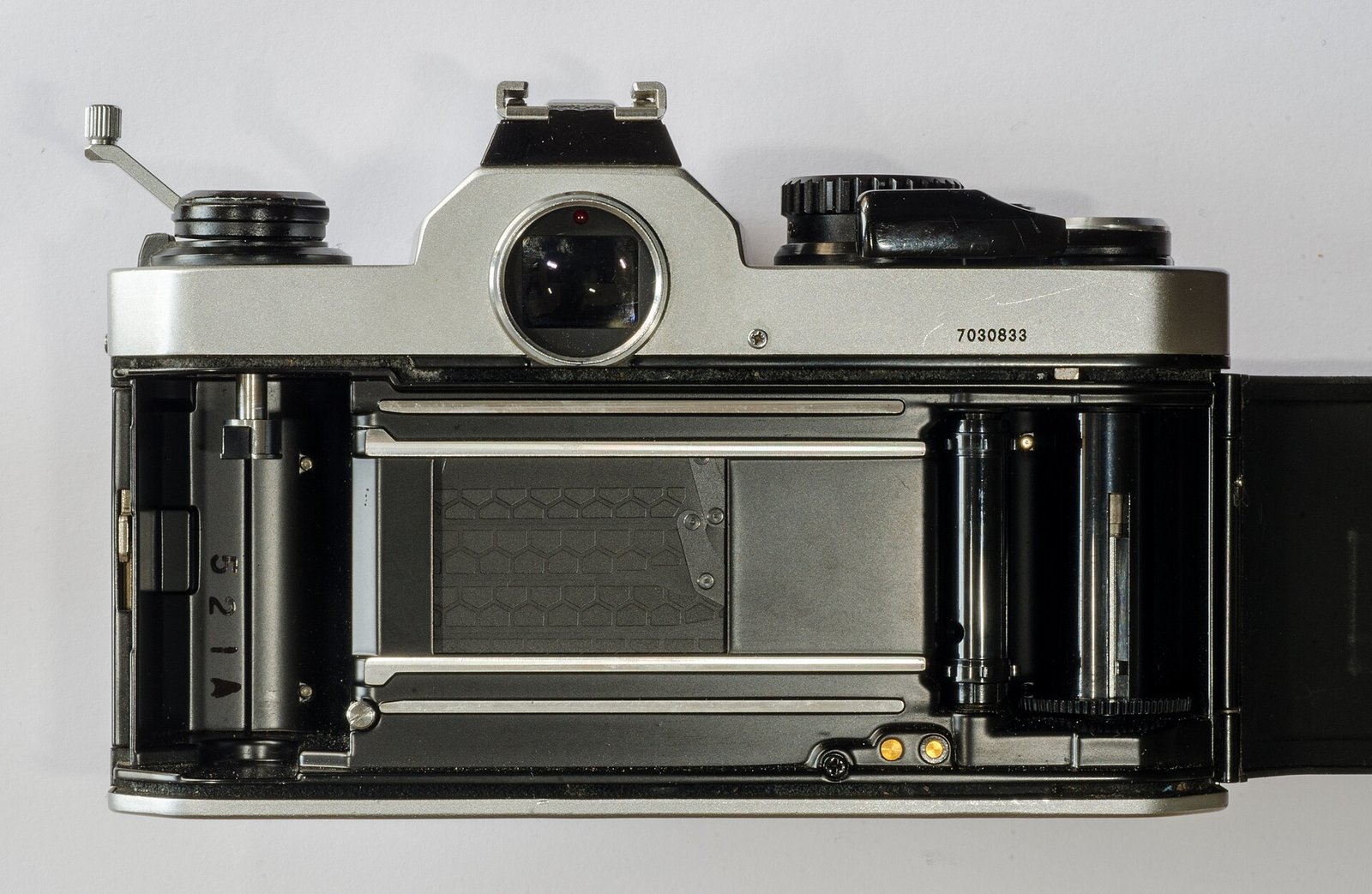
The film advance lever should turn all the way without catching, and the frame counter should go up by one with each wind. On a motor-driven camera, listen for a winding sound that does not drag.
Checking by sound and sight only tells you whether the shutter is outright broken. Kamerastore writes that most online sellers do just this much and list the camera as “working.” Whether the speeds are accurate can only be known by measuring with a shutter tester.
3. The film chamber and light seals
With the back open, look along the edges where the door closes and around the hinge. Many cameras have black foam strips (light seals) here to keep light out. The foam breaks down with age. If it springs back softly when you press it with a fingertip, it is fine; if it comes off sticky or crumbles, it needs replacing. Decayed foam around the door is a common place for light to leak into a 35mm camera. Seals can be replaced, so if you see decayed foam, factor the cost into your price when you haggle. Also check for dust piled up in the film chamber or broken parts.
4. The lens
Shine the flashlight in from the back and look in from the front. Then look the other way too. You are looking for three things.
- Fungus A pattern spreading like cobwebs or fine roots. It forms when dust and moisture get trapped between lens elements, and it spreads over time. Even if you wipe it off, it can leave marks on the coating.
- Haze The whole glass looks cloudy. A smudge on the outside is easy to mistake for haze, so clean the outer glass first, then look. A hazy lens loses contrast and sharpness when you shoot into the sun.
- Scratches A scratched lens also loses sharpness and contrast when you shoot into the light.
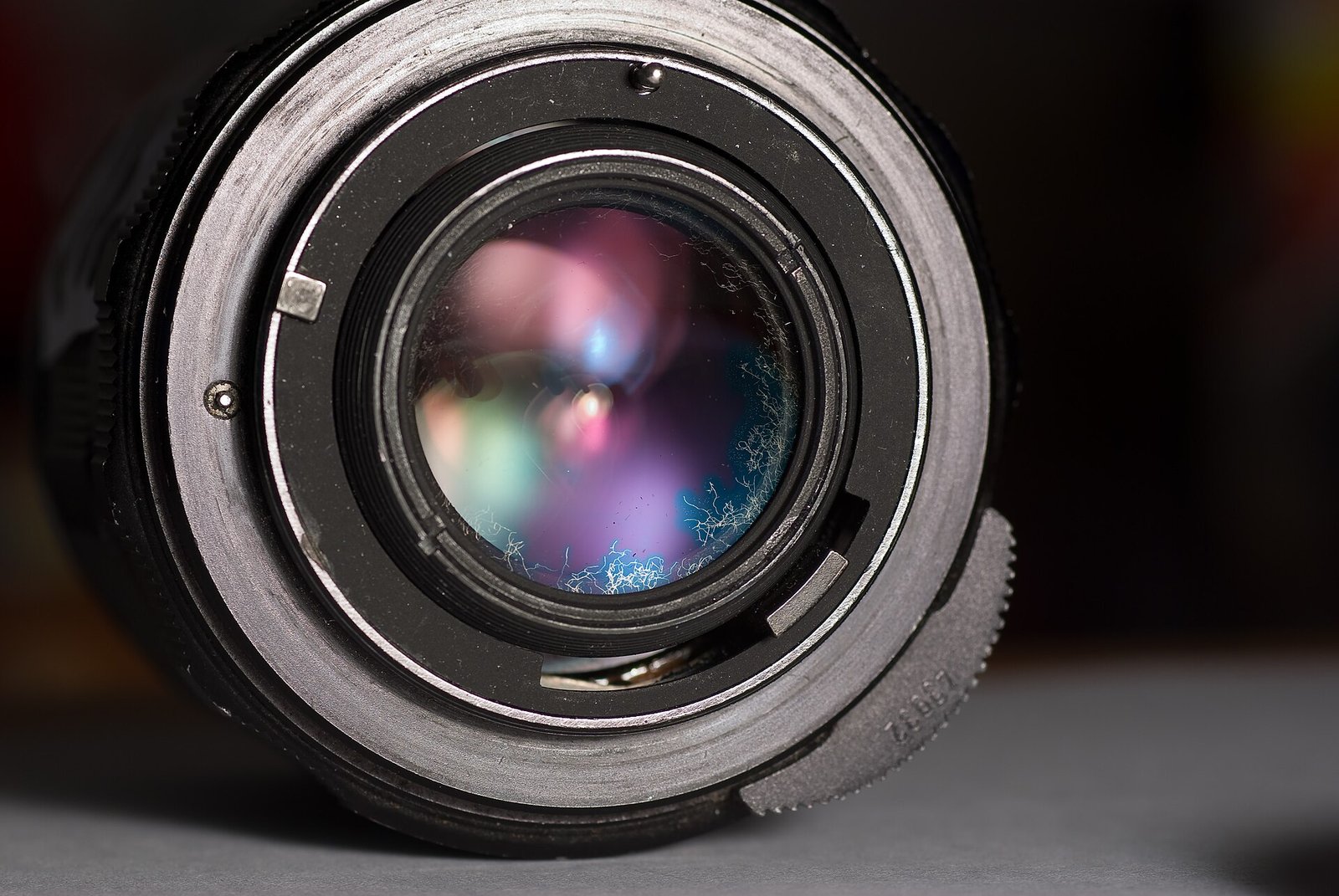
Japan Camera Hunter, a used camera buying service in Tokyo, says flatly that a little dust is fine but fungus is not. The focus ring should turn neither too stiff nor too loose, and the aperture should click firmly at each stop. Oil spreading on the aperture blades can mean a bigger problem inside.
A flawed lens is not necessarily a useless one. Kamerastore shot with a Canon 50mm lens that had fungus and haze and got usable photos, with only slightly lower contrast. The shop concludes that lens flaws cut the price more than they hurt the pictures. Still, fungus spreads, so think it through even when the price is low.
5. Viewfinder and rangefinder
The viewfinder should be bright and clean. If it looks cloudy or has black spots, there may be fungus inside or a cemented element may be separating.
A rangefinder camera has one more step. The top three on our ranking are all Leica M rangefinders. In the small patch in the middle of the viewfinder, the image appears doubled, and when the two images merge into one, you are in focus. With the focus ring at infinity (∞), the two images should overlap exactly on something very far away. Andrew Nemeth's “Leica FAQ,” a collection of Leica servicing information, says to use something more than 3 km away for infinity, and recommends the moon at night. Images that are offset vertically also need adjustment. Also focus on nearby sign lettering, and check that the distance on the lens scale matches the real distance. The same source says a dim double-image patch usually improves with just a cleaning.

Automatic cameras: electronics first
Point-and-shoots and other cameras with lots of electronics need different checks. Put in the right battery and power on first. CR123A or AA batteries are common in these cameras. Check one by one that the lens extends and retracts smoothly, that the display lights up, that the flash fires, and that the camera responds right away to the shutter button. Listen, too, for an even motor sound as it winds and rewinds film.
These cameras are hard to fix once they break. In its Mamiya RZ67 guide, Kamerastore writes that electronic failures are far harder to repair than mechanical ones. Some failures need a new circuit board, and Mamiya no longer makes that board. The same article also says popular cameras, compacts especially, have a reputation for “suddenly dying.”
The common failure points of one model, the Konica Big Mini, are covered separately in “Read.”
If breakdowns worry you, there are also newly made film cameras. The Pentax 17 on our ranking is a new camera from 2024. The film point-and-shoots you can buy new today are collected in “No More Digging Through Used Listings: Six New Film Compacts.”
If you can't handle it, ask the seller
When you buy online, you cannot handle the camera, so you rely on the seller's description that much more. Ask four things before you commit.
- Have you shot a roll through it recently? If so, ask to see photos from that roll. That is different from firing the shutter without film.
- Do all the shutter speeds work? Ask for a video of it firing at the slowest speed and on B too.
- Has it been repaired or serviced? Ask when and where.
- Can I return it? Ask whether you can send it back if a fault shows up after it arrives, and keep the answer in the message thread.
If you buy from a shop, check the return terms first. Kamerastore accepts returns without asking a reason within 30 days of the day you receive the item. Where readers buy and sell among themselves, like the 5ft.mag Market, the deal is between individuals. The more it is that kind of place, the more you should ask the questions above ahead of time and check the item as soon as it arrives.
After you buy: the first roll
Once the camera is in hand, shoot a cheap roll through it first. You do not have to finish it, but if you shoot to the end and rewind, you can check the rewind too. As you shoot, note the shutter speed and aperture for each frame in your phone's notes. Mix bright outdoors, shade and indoors, and use slow and fast speeds evenly. After development, if frames at one speed come out noticeably darker or brighter than the rest, that speed is off. Red light creeping into the film means light may have leaked in.
Even a first roll is not a perfect test. Kamerastore says shutter accuracy can only be known with professional equipment, and a film test or listening is not enough. Still, light leaks and badly wrong speeds show up on the first roll.
If you see a problem, take it to a repair shop. The “Repair shops” tab on the 5ft.mag Labs map collects 23 camera repair shops with their specialties and contact details (as of November 19). You can find a lab for your first roll on the same map.
One-page summarySave this for reference
- Battery
- No corrosion in the battery compartment, and the meter moves with the lightFor cameras that used mercury cells, a substitute battery or an adapter
- Shutter
- Every speed once, with extra care at slow speeds and BWith the back open, check that the curtains move smoothly
- Advance
- The lever does not catch, and the frame counter goes upOn motor cameras, the winding sound does not drag
- Seals
- The foam around the door is not sticky or crumblingIf it has decayed, factor the replacement cost into your haggling
- Lens
- Fungus, haze and scratches, checked with a flashlightThe focus ring and aperture move evenly
- Rangefinder
- The two images merge at infinityNot offset vertically
- Auto
- Power, lens extension, display, flash, shutter buttonElectronic failures are hard to fix
- Ask
- Recent test roll, shutter speeds, repair history, returnsKeep the answers in the message thread
- First roll
- Note the speed and aperture for every frame as you shootIf you see a problem, take it to a shop in the Repair shops tab
The camera ranking counts the 6,403 reader photos that list a camera, out of those published on 5ft.mag through November 19.


