

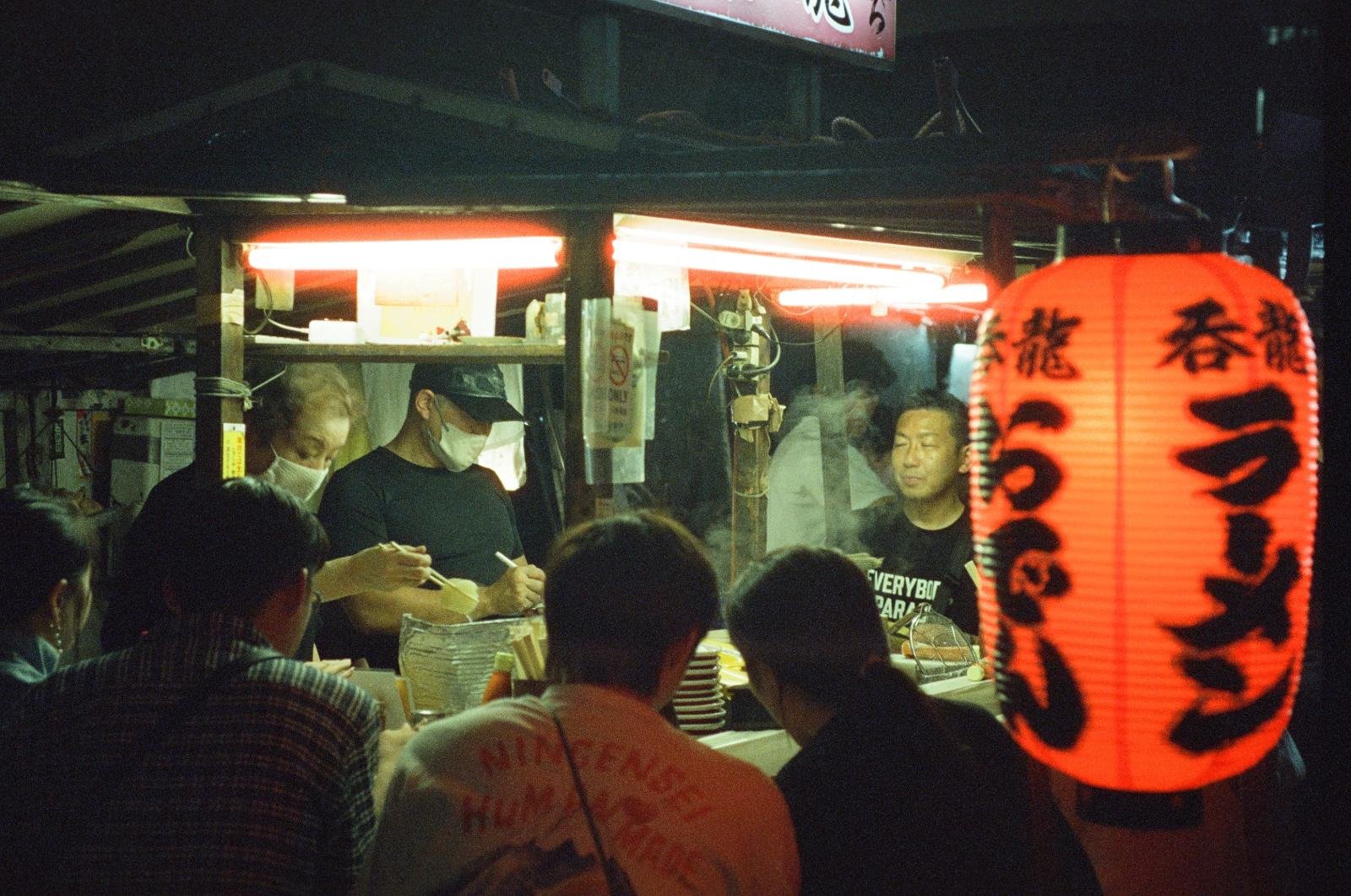
By November the commute home is already pitch dark. Around now, more people start loading 800T into their cameras. But why are there so many films with 800T in the name? We followed the tungsten films in the 5ft.mag catalog one by one, and a good number of them start from the same cinema film. Here is what we found, along with thirteen night photos from readers.
First, what is tungsten film? It is balanced for incandescent bulb light (around 3200K), which is much yellower than sunlight. So colors come out right under indoor lights or on a night street, and the frame leans blue in daylight. The film information below each photo is based on the 5ft.mag catalog and each company's official materials.
The Original: Kodak Vision3
Kodak Vision3 500T
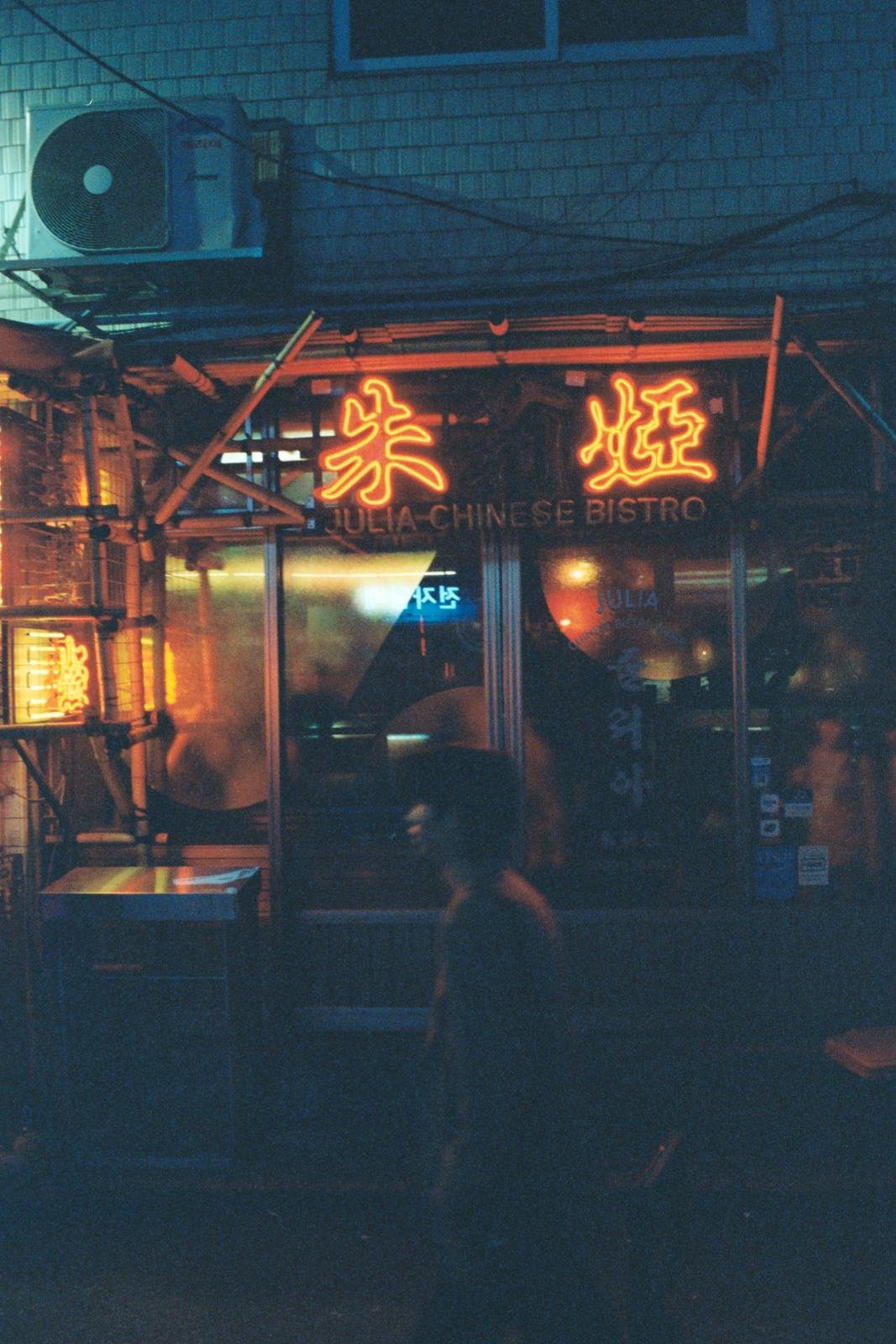
This is a color negative film for motion picture shooting that Kodak still makes. According to Kodak, you shoot it at EI 500 under tungsten light, and in daylight you put an 85 filter on and shoot at EI 320. The proper process is ECN-2, a process made for cinema film.
On the back of the film is a black carbon layer called rem-jet. It keeps light that has passed through the emulsion and the base from bouncing back from behind. In the cinema process, this layer is removed separately before development.
See Kodak Vision3 500T in the catalog →
Kodak Vision3 200T
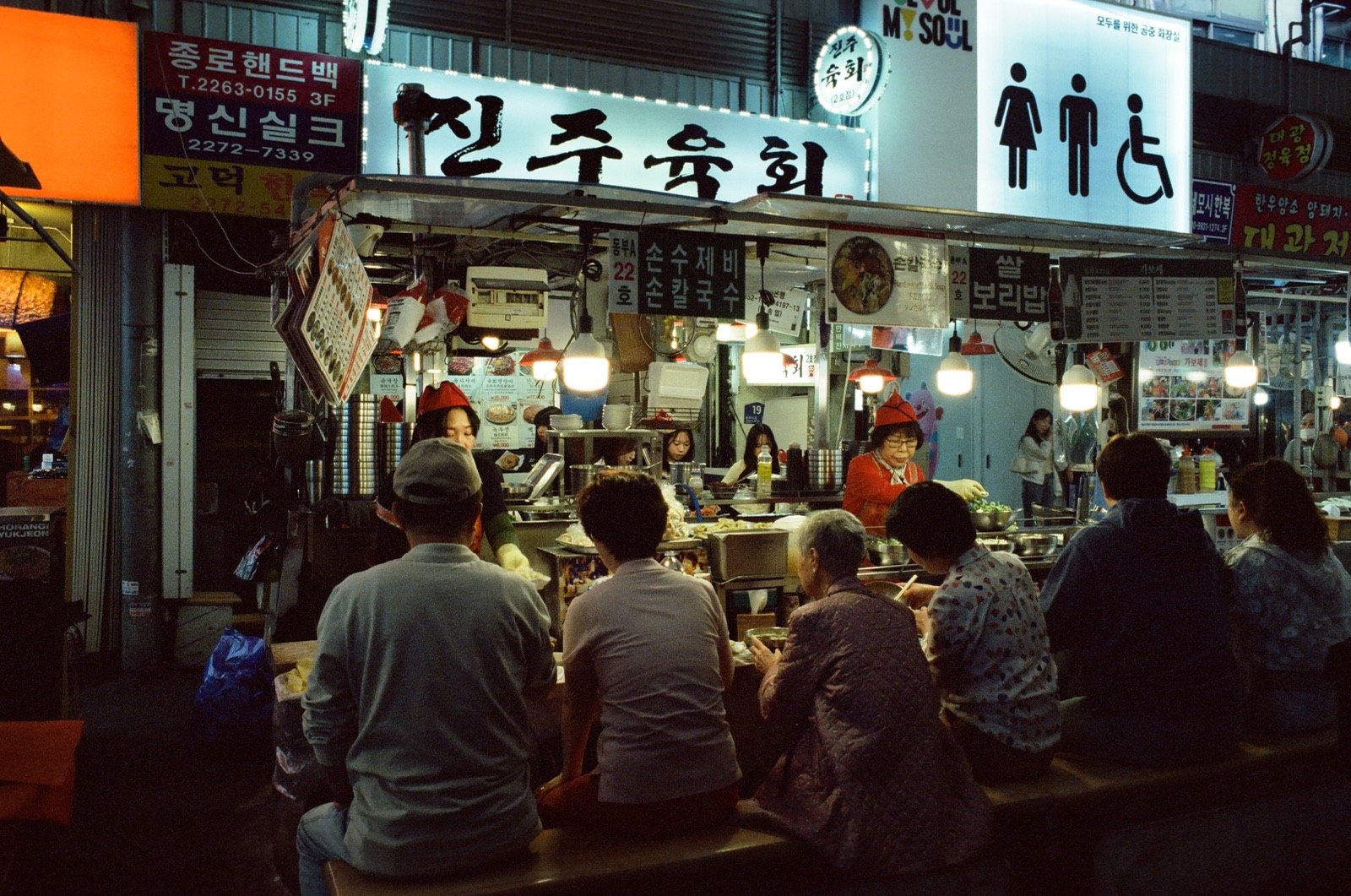
This is the 200-speed tungsten film in the same Vision3 family. Kodak says to shoot it at EI 200 under tungsten light, and with an 85 filter in daylight at EI 125. In a well-lit place like the market in this photo, 200 is plenty.
See Kodak Vision3 200T in the catalog →
AHU Instead of Rem-Jet: Kodak's New Vision3
Kodak Vision3 500T AHU
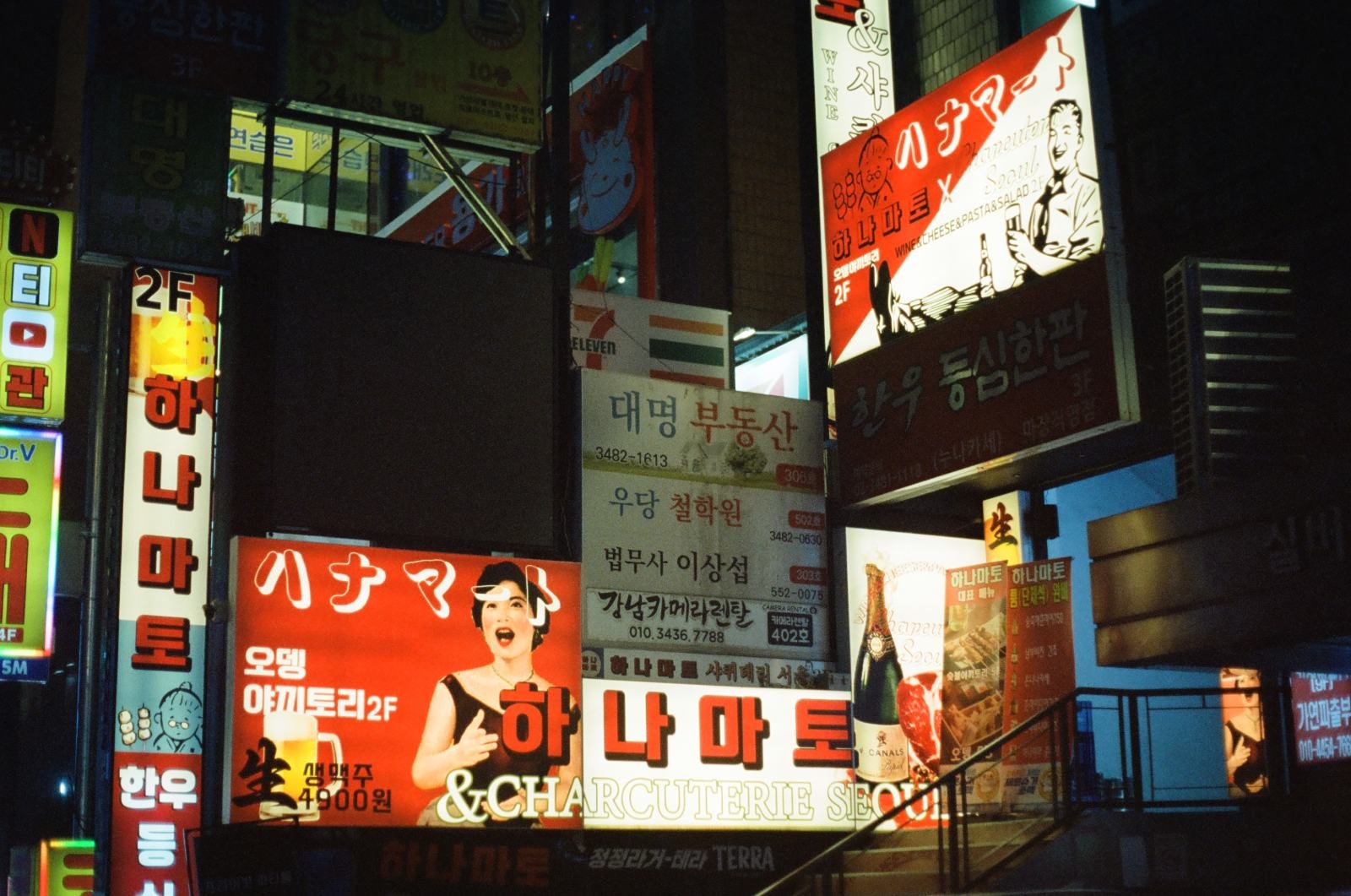

Kodak has recently been removing the rem-jet from its Vision3 negative films. In its place, it put an anti-halation undercoat (AHU) beneath the emulsion. Kodak describes it as a gel layer containing silver that washes away during development.
Kodak says this layer blocks halation better than rem-jet. That is why bright signs on AHU film keep a calm edge instead of bleeding red. ECN-2 is still the proper process. We also corrected the catalog description of this film to match.
See Kodak Vision3 500T AHU in the catalog →
The Rem-Jet-Free 800Ts
Film that still has its rem-jet is hard to hand over as is to a regular photo lab (C-41). So films appeared with the rem-jet stripped off in advance and spooled for still photography. With no rem-jet they can be developed in C-41, but the price is a red glow (halation) around strong lights. Light bouncing back from behind reaches the layer closest to the base first, the one that responds to red. That is why streetlights in 800T photos wear a red ring.
Cinestill 800T

This is the most famous film in this group. The ramen shop photo at the very top was shot on it. In its official guidance, CineStill explains that 800T was "originally based on a 500-speed motion picture film" but is "not simply repackaged." It also states officially that with no rem-jet, it can be developed in C-41.
It is widely said that the original is Kodak Vision3 500T, but CineStill does not name it itself, saying it does not use other companies' trademarks. The 800 in the name is a speed CineStill chose after testing the film itself; it says results were best when shot at EI 800 under tungsten light.
See Cinestill 800T in the catalog →
Reflx Lab 800T

This is the 800T from Reflx Lab in Shenzhen, China. Retailers describe it as Kodak 5219 (Vision3 500T) with the rem-jet removed and rated at 800.
See Reflx Lab 800T in the catalog →
MARIX 800T
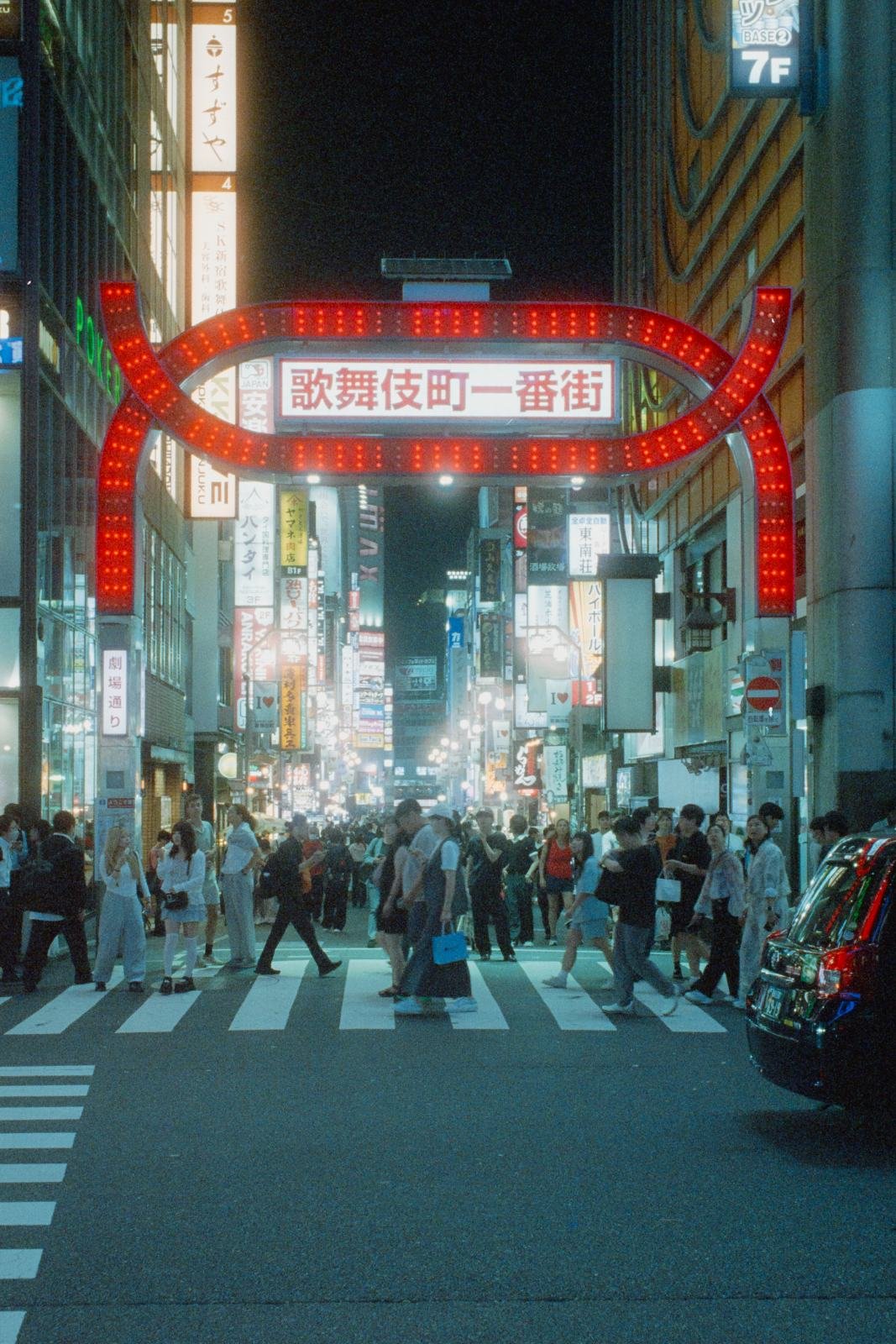
This is an ISO 800 film balanced for tungsten light. It is often used for city nights, like this photo of a street under a red arched sign.
See MARIX 800T in the catalog →
Chinese Repackaged 800T
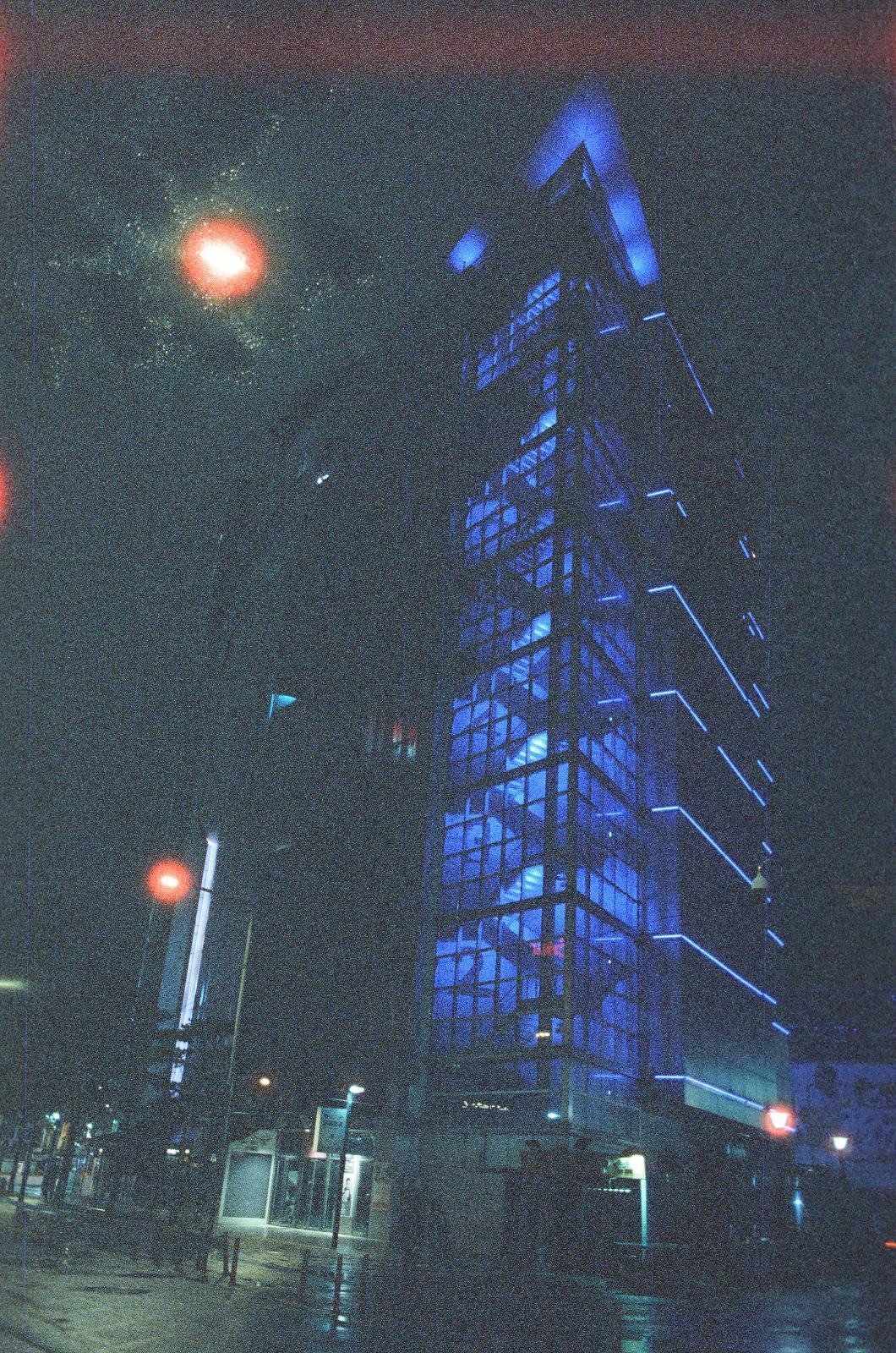
This is an unbranded Chinese repackaged film, what Korean shooters call "Jungnestill" (a nickname for Chinese CineStill-style rolls). In a reader post on the film publication Emulsive, it is sold on Chinese shopping sites as "cinema film with the rem-jet removed," and the writer says they confirmed it was Vision3 500T (5219) from the edge markings on the film.
The same post also mentions a lab that decided not to accept this film, worried that leftover rem-jet residue could dirty its processing machine. It is a good idea to ask your lab before dropping a roll off.
See Chinese Repackaged 800T in the catalog →
Auroer 800T

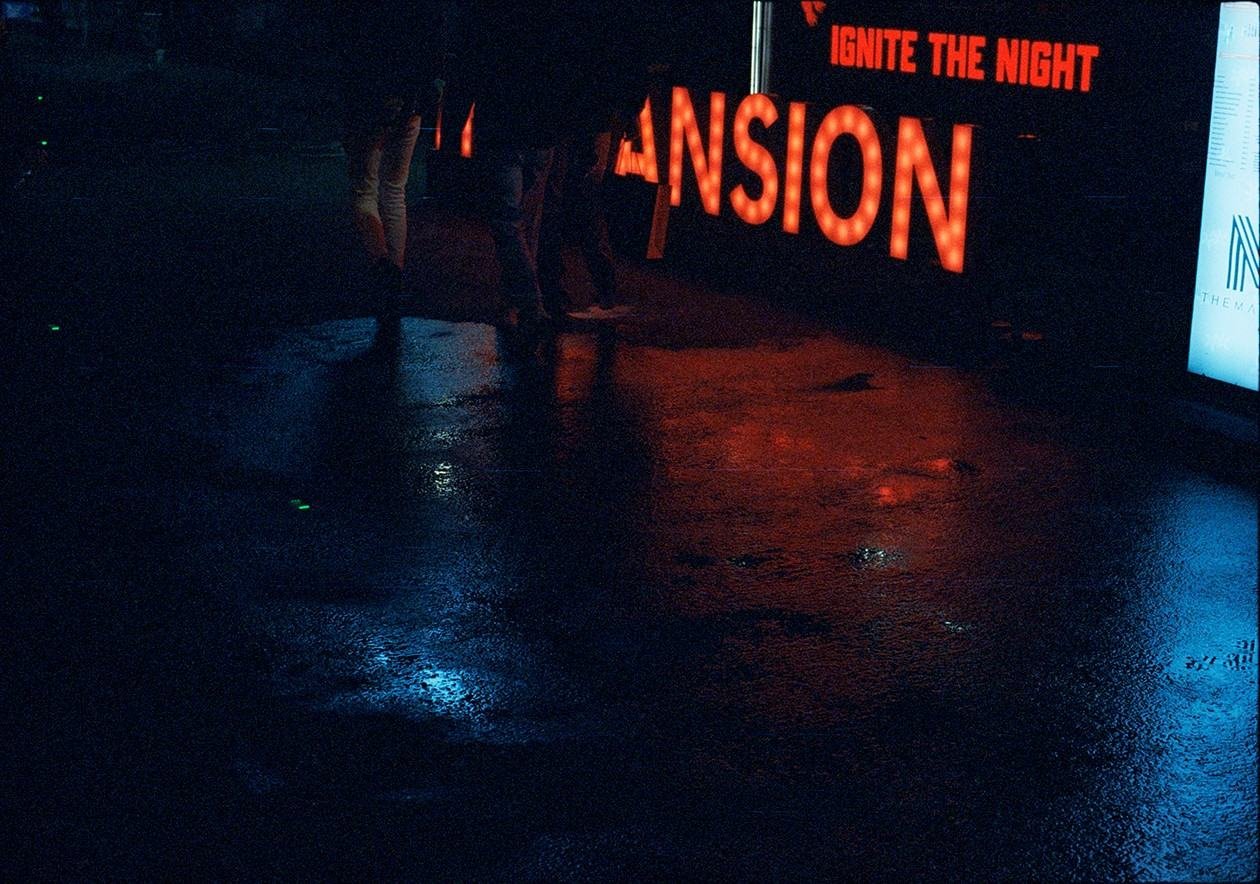
This is an ISO 800 tungsten film from the Korean brand Auroer. It is sold as a cinema film that a regular color lab can develop in C-41, and its color leans cool and cinematic rather than warm and yellow.
See Auroer 800T in the catalog →
There are others too, such as CANDIDO 800 from the UK's Candido Collective (per PetaPixel, Vision3 500T respooled with the rem-jet removed) and Vandal Tungsten 400, which has the rem-jet removed and is sold at ISO 400.
Using Tungsten Film in Daylight
Chinese Repackaged 320T
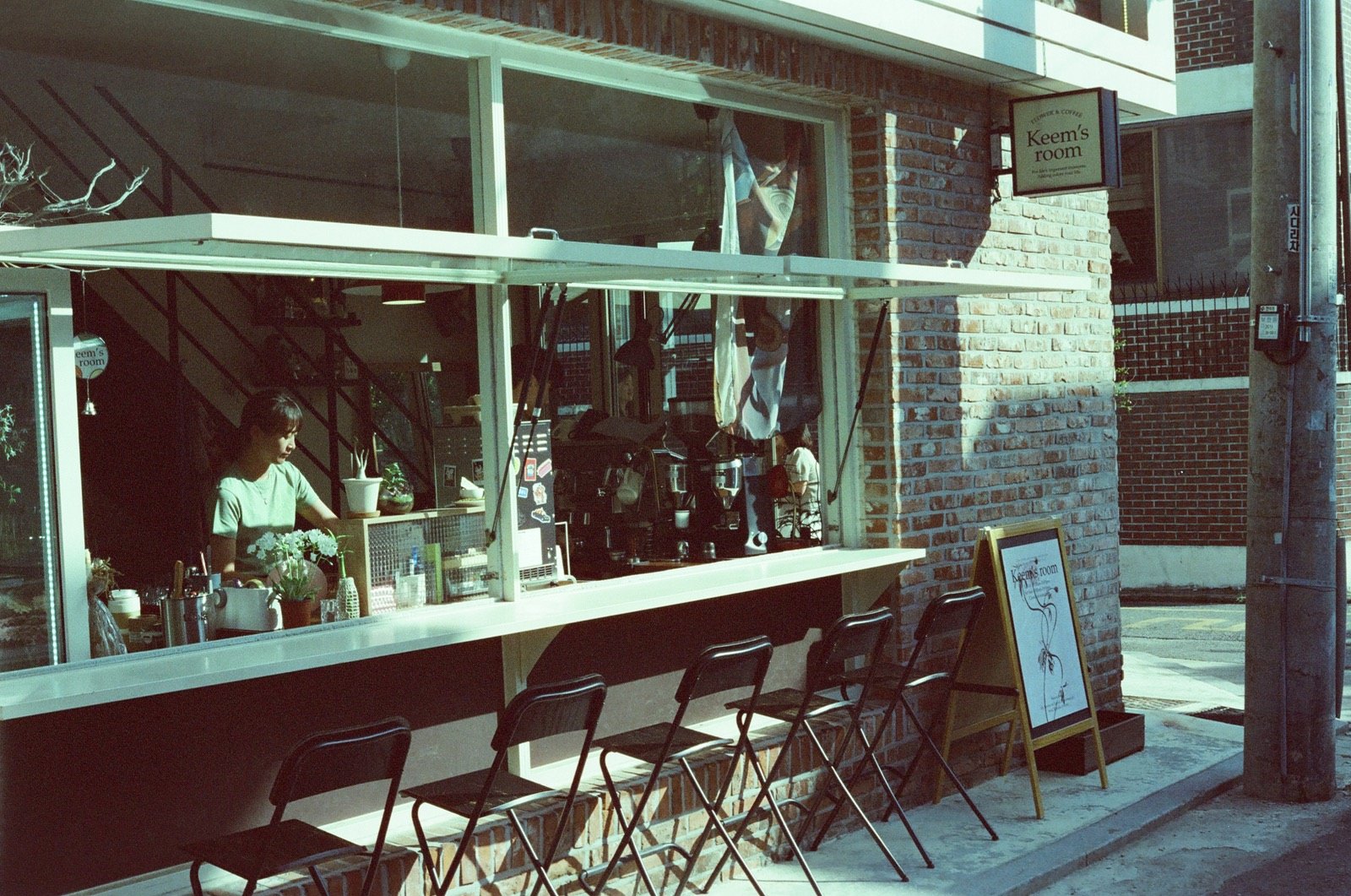
Use the same kind of tungsten film in sunlight and the whole frame leans blue like this. Plenty of people enjoy that blue cast on purpose. If you want to correct the color, put on an orange 85 filter, as Kodak advises. The trade-off is less light reaching the film (for Vision3 500T, EI 500 drops to 320).
See Chinese Repackaged 320T in the catalog →
A Different Root: Fujifilm Eterna 500T
Fujifilm Eterna 500T
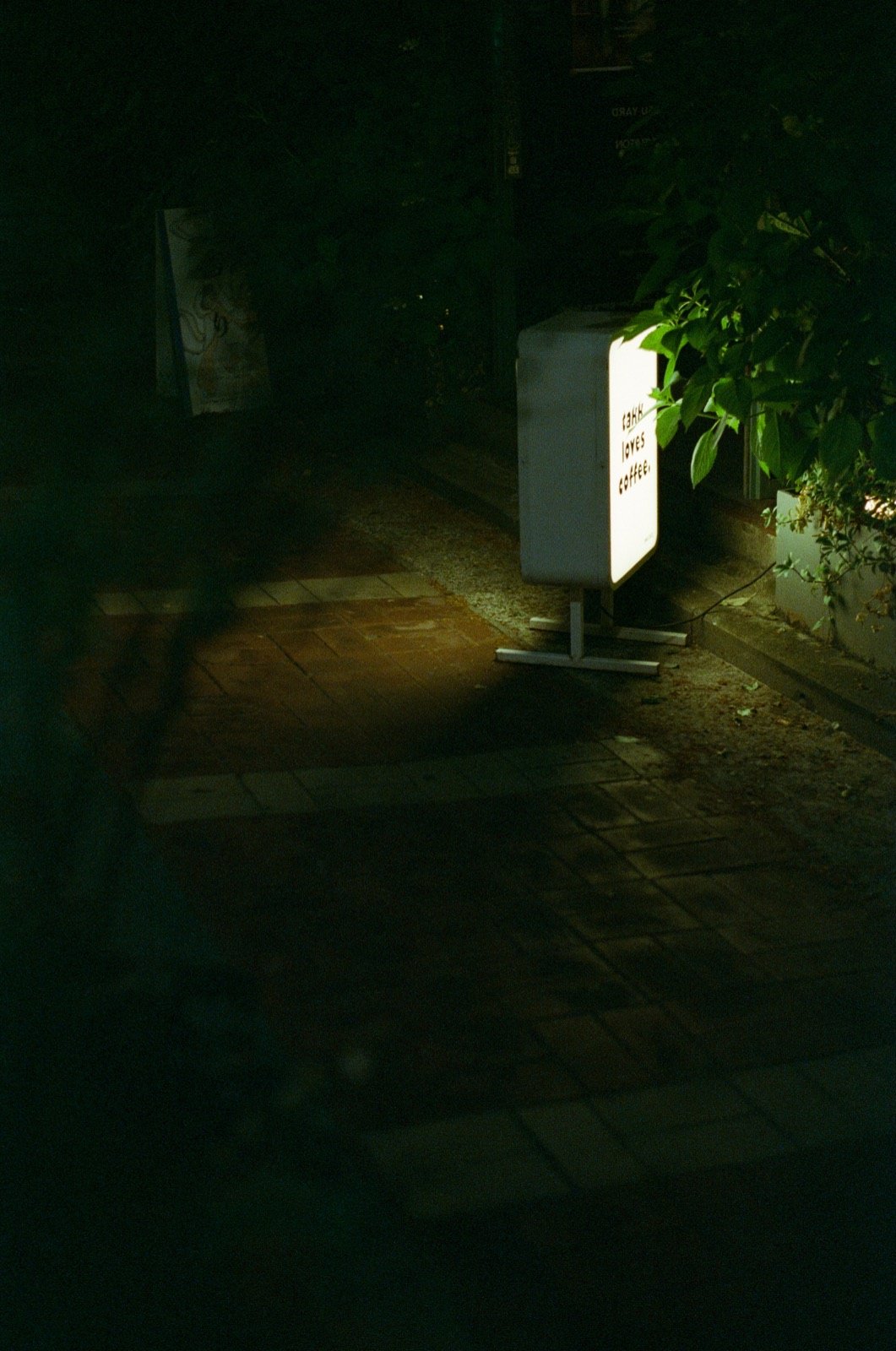
Kodak isn't the only one; Fujifilm had a cinema tungsten film too. Eterna 500T gave fast speed and calm color at night and indoors. Fujifilm announced the end of cinema film production in September 2012 and finished most of its production in March 2013. Today you can occasionally come across it as expired film.
The 5ft.mag catalog had the discontinuation year wrong, listing 2018. We corrected it to 2013.
See Fujifilm Eterna 500T in the catalog →
So Which One to Pick?
If you want that red ring around streetlights, a rem-jet-free 800T is the answer. If you want calm cinema color without the glow, look for a lab that will develop an AHU version, or the original with rem-jet, in ECN-2. Either way it is tungsten film, so if you plan to shoot it by day, it helps to have an 85 filter in your bag.
Thank you to the thirteen people whose photos appear here. All of them agreed to publication on the site, on social media and in the print magazine when they uploaded to 5ft.mag. If you have night photos shot on tungsten film, we'd love for you to upload them on the 5ft.mag film pages.


