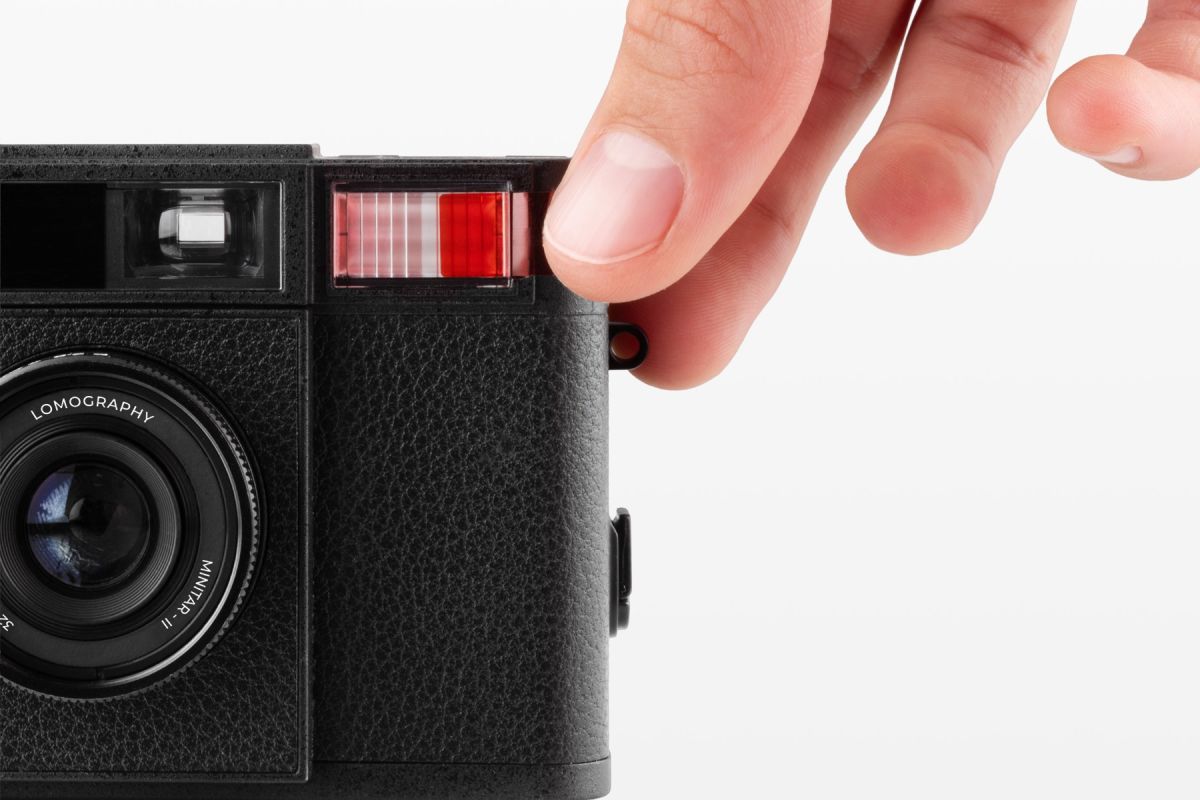
"Like every Lomography camera, the MC-A is less about 'don't focus' and more about 'don't worry about focus.' This time, LiDAR takes care of it for you."
In October 2025, Lomography announced a new 35mm compact: the Lomo MC-A. In Lomo's catalog it sits next to a familiar name, the LC-A, but inside it works quite differently. The MC-A is Lomography's first 35mm autofocus camera. It measures distance with LiDAR, timing how long a small point of light takes to hit the subject and bounce back. Exposure is automatic from ISO 100 to 3200, with no shutter or aperture priority modes. You hold it and press with one hand.
The change: autofocus arrives
Reviewers keep landing on two first impressions. First, the AF is surprisingly accurate. One outlet wrote that it missed focus on almost no frames over four rolls. Another said it locks quickly except at close range, below about 50cm. Second, auto exposure handles up to ISO 3200. Lomo's old LC-A line topped out at ISO 1600, so this is a step up. You have more freedom in low light.
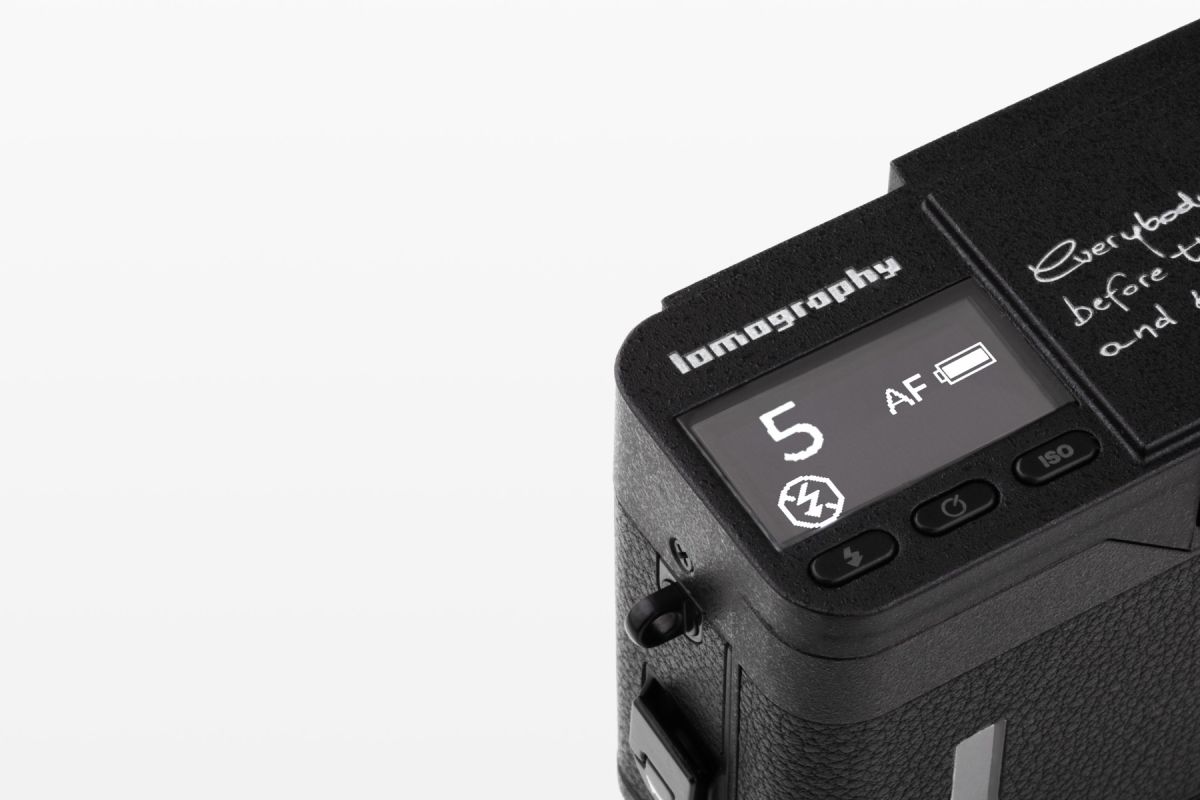
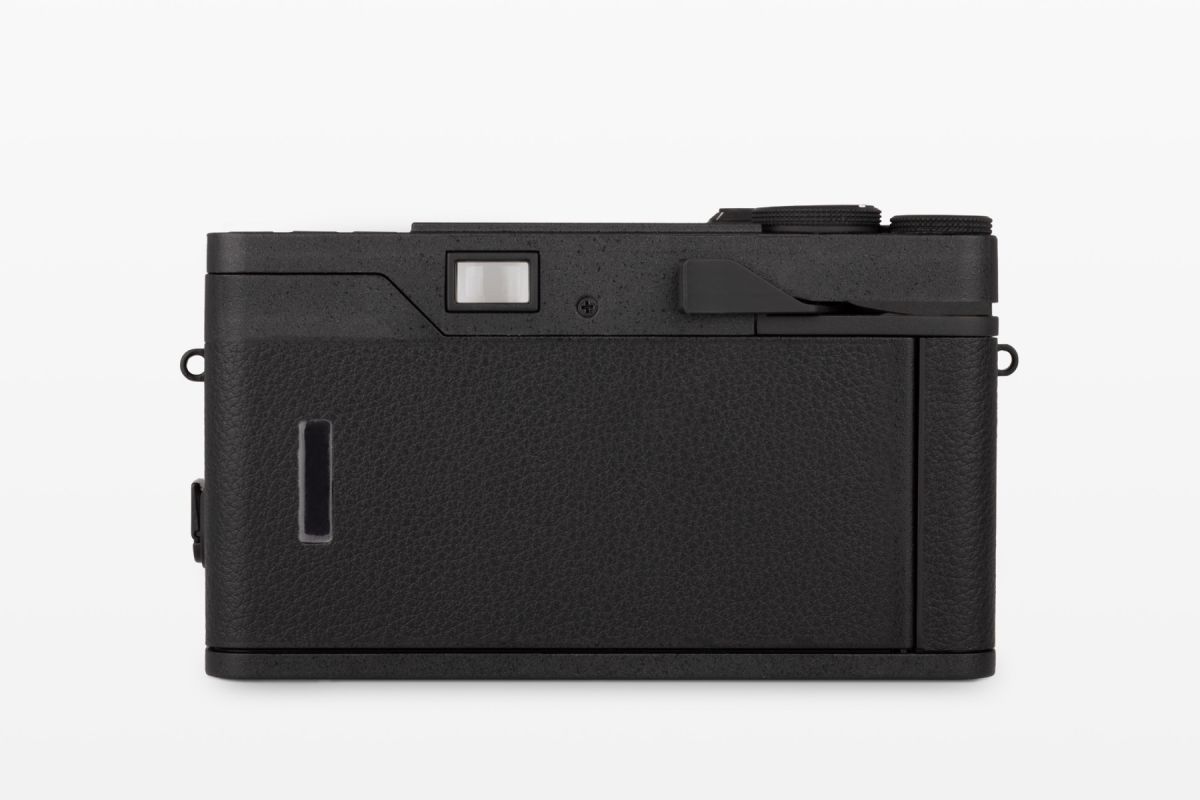
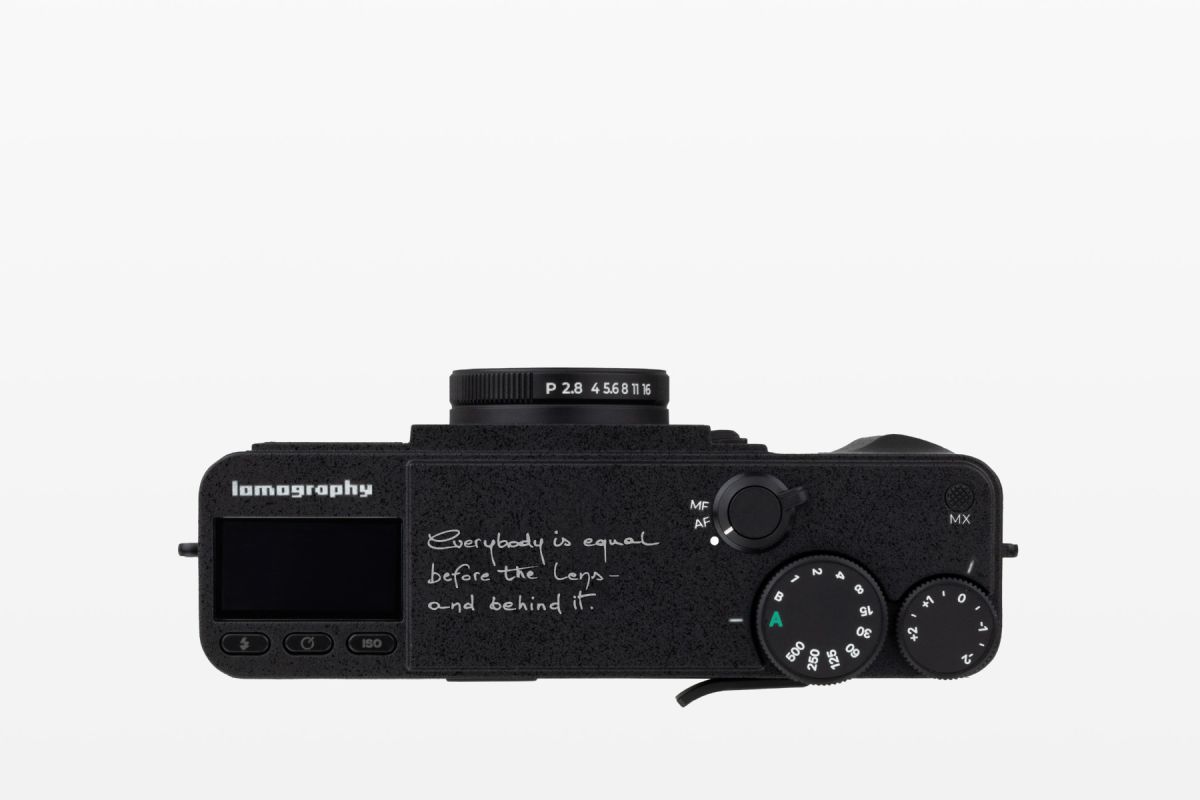
The body is small and dense. A metal shell with a leather-pattern finish. It fits in one hand, with a small LCD window set into it. Press the shutter and the LiDAR fires off its dots of light. Sit in a dark cafe and press the shutter, and you can see that light. Which leads to the first weakness.
The wobbles: AF you can hear, LiDAR that gets confused
The AF is loud. Strictly speaking, the LiDAR measurement itself is silent, but you can clearly hear the motor moving inside the lens. One reviewer wrote, “For 2026 technology, it should have been quieter.” Press the shutter once in a quiet room, a cafe or a gallery, and the person next to you turns around. Any stealth for candid shooting is gone.
The second issue is the limit of LiDAR. It measures a single point, so in busy scenes (through mesh, in front of a window, among dense branches) it can lock onto a background you never meant to focus on. Re-aim and lock again and the problem goes away, but that extra second of "again" can cost you the decisive moment in street photography. It does not sit well with Lomo's point-and-press approach.


And then: the advancer in the first batch
Reviews point to a more serious problem: a defect in the film advance mechanism. On pre-production units, there were reports of the rewind tension letting go, causing light leaks when the back was opened. Even after the move to production units, several users reported that the winding lever would turn all the way without advancing to the next frame, that the shutter would not fire, or that two frames would slightly overlap.
One American photographer shot 15 rolls on the MC-A, wrote about having “lost several frames to film jams,” and got a refund. Another reviewer wrote that both cameras they tested showed the same winding issue. So it reads less like bad luck with a few units and more like a pattern pointing to a mechanical defect across the early batch.
Lomography runs a two-year warranty with free repair or replacement for the LC-A line. The MC-A falls under the same policy, so a confirmed defect can be exchanged or refunded. But as of this writing (May 2026), there has been no firmware update and no official revision announced for the advance mechanism. It is still unclear whether later production batches use the same parts or whether something was quietly changed.
Same pattern, different cameras
This pattern (a good first idea on top of a shaky basic mechanism) is not unique to the MC-A. The 2022 LomoApparat had an appealing idea, a 21mm wide angle, but tied it to a fixed exposure of 1/100s at f/10, which made it nearly useless on cloudy days. The 2024 Lomomatic 110 was a compact that brought the 110 format back, but its film advance sometimes left blank frames, and the shutter button sat so close to the ISO/Bulb button that people often pressed the wrong one.
Lomo never released separate firmware or hardware fixes for these cameras' basic problems. Instead, it puts out special color editions every year, like the Alexanderplatz for the Apparat or the Nocturne for the Lomomatic 110. The outside changes. The inside stays the same.
The charm of a Lomo-style camera is a forgiving attitude toward imperfection. Whether that forgiveness should stretch to "it's fine if the basic mechanism is shaky" is another question.
So: buy now, or wait?
The MC-A's strengths are clear. The first 35mm AF from Lomography, auto exposure up to ISO 3200, a metal body that fits in one hand. It matters as the first camera to add autofocus to the Lomo-style snapshot. But to take that on, you also have to accept three wobbles: winding reliability, AF noise and the limits of LiDAR.
If you are thinking of buying one now (spring 2026), waiting a little longer may be the sensible call. The advancer parts could be quietly improved in later batches, and a firmware update may still come, however late. Official import channels in Korea are not settled yet, so refunds and exchanges could be a hassle. And the clincher: Lomo-style cameras usually settle down in price six months after launch.
Still, this camera will probably be remembered as the one where Lomo took its first step toward closing the gap with digital. Wobbles and all, the fact that the word AF entered Lomo's catalog for the first time is a change worth recording.