


Film never went away, and more companies keep starting to make it. This one comes from somewhere else. Light Lens Lab (LLL for short) is a Chinese optics company that has spent years making 1:1 replicas of vintage Leica lenses.
Why would an optics company make film?
Founded in 2018 in Shangrao (上饶), Jiangxi Province, by Mr. Zhou (周), LLL is known for what it calls the "Replication Project." It makes 1:1 copies of rare vintage lenses in Leica M and screw mount. Its signature lens, the 35mm f/2 Eight Element, is a remake of the 1958 Summicron 35mm f/2 v1, and reviewers have credited it with reproducing even the optical rendering people call the Leica glow.
To get there, LLL brings back formulas that modern mass production has mostly abandoned. It uses glass blended with lead and lanthanides to match the refractive indices of vintage Leica and cinema lenses. In other words, LLL is a company that restores formulas. Moving from optical glass to film emulsion is a continuation of that same work.
The January 2025 announcement
On January 29, 2025, LLL used its official blog to make the film project official. The scope is not small. It covers T-grain black-and-white, E-6 color reversal, ECN-2 motion picture film, and even a revival of Kodak's Kodachrome K-14 process. The company also said it was looking at a peel-apart instant format.
The core idea is self-sufficiency. LLL did not just develop its own formulas. It built its own automated coating equipment from scratch. What the company stresses most is that it can control the whole process with its own formulas and its own machines. The lens business will stay under the LLL name, and the film will launch under a separate new brand. No name had been chosen at the time of the announcement, and a year and a half later, none has been made public.
The V3 black-and-white emulsion, by the numbers
Black-and-white has made the most progress over those eighteen months. Here are the figures LLL released for its V3 tabular grain emulsion between May and June 2025.
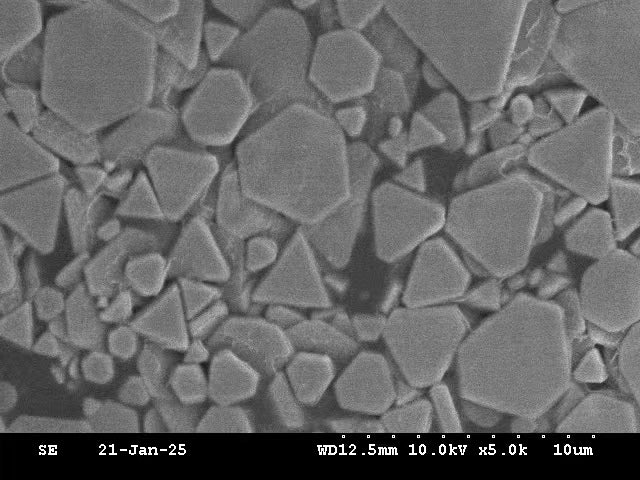
- Tabular crystals of 2 to 3 microns, plus a small number of 1-micron cubic-octahedral crystals
- Speed of ASA 125, with an integrated antihalation layer
- Spectral sensitivity of roughly 380 to 700nm. LLL claims this is "the widest color sensitivity range of any consumer black-and-white film"
- The blue- and green-sensitizing dyes come from a British emulsion maker that no longer exists. The red-sensitizing dye came by a similar route
The company says it is also developing a separate ISO 400 black-and-white film with a traditional grain structure. That one is aimed at the look of the classic black-and-white stocks on the market.

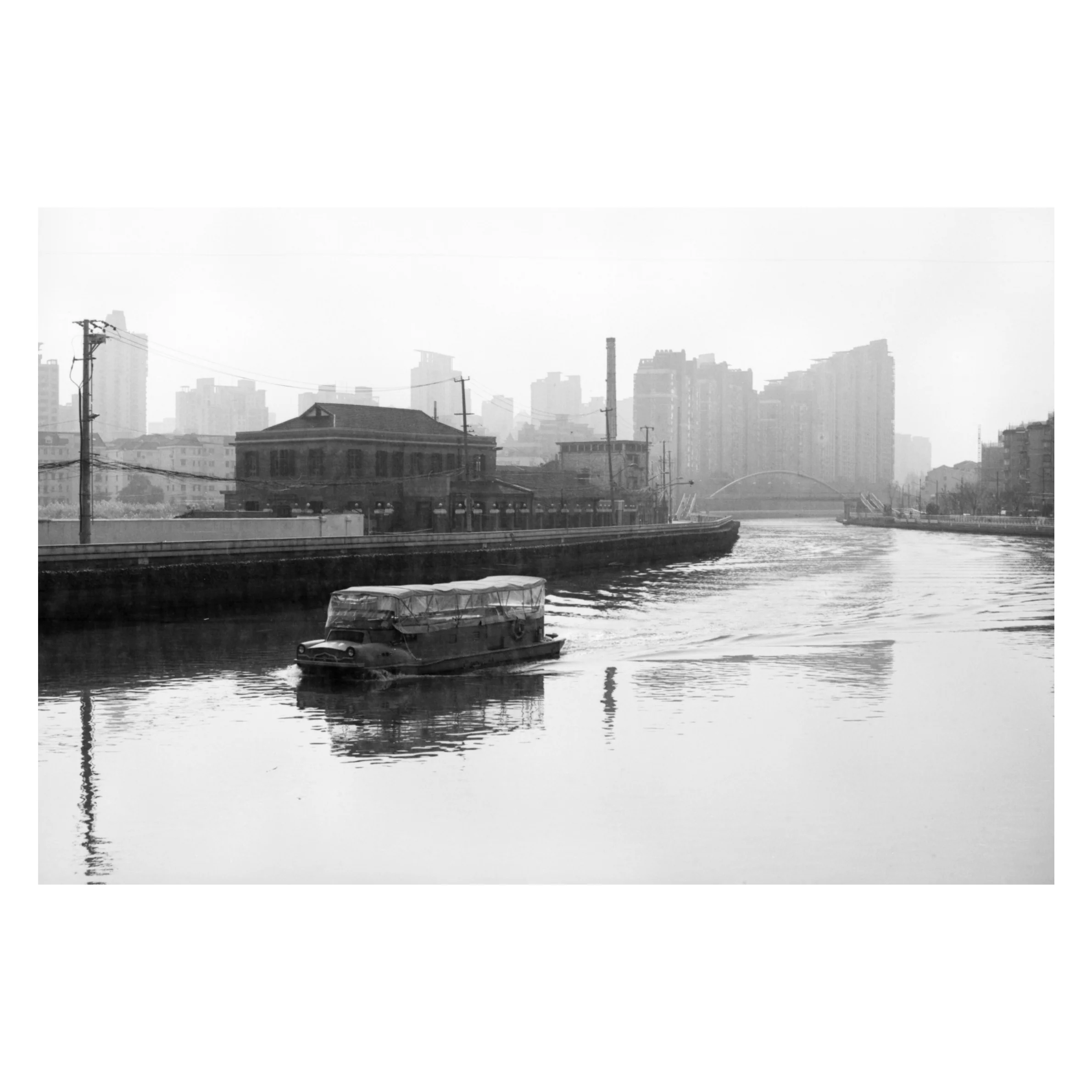
2026: where mass production stalled
The ambition was large, and the schedule turned out to be less simple. LLL started a prototype assembly line in June 2025. Then production tests from late 2025 into early 2026 turned up two real problems: static electricity during 8×10 film coating, and scratches and emulsion damage in 4×5 tabular grain tests. It was another reminder that film is as sensitive to the production environment as it is to the formula.
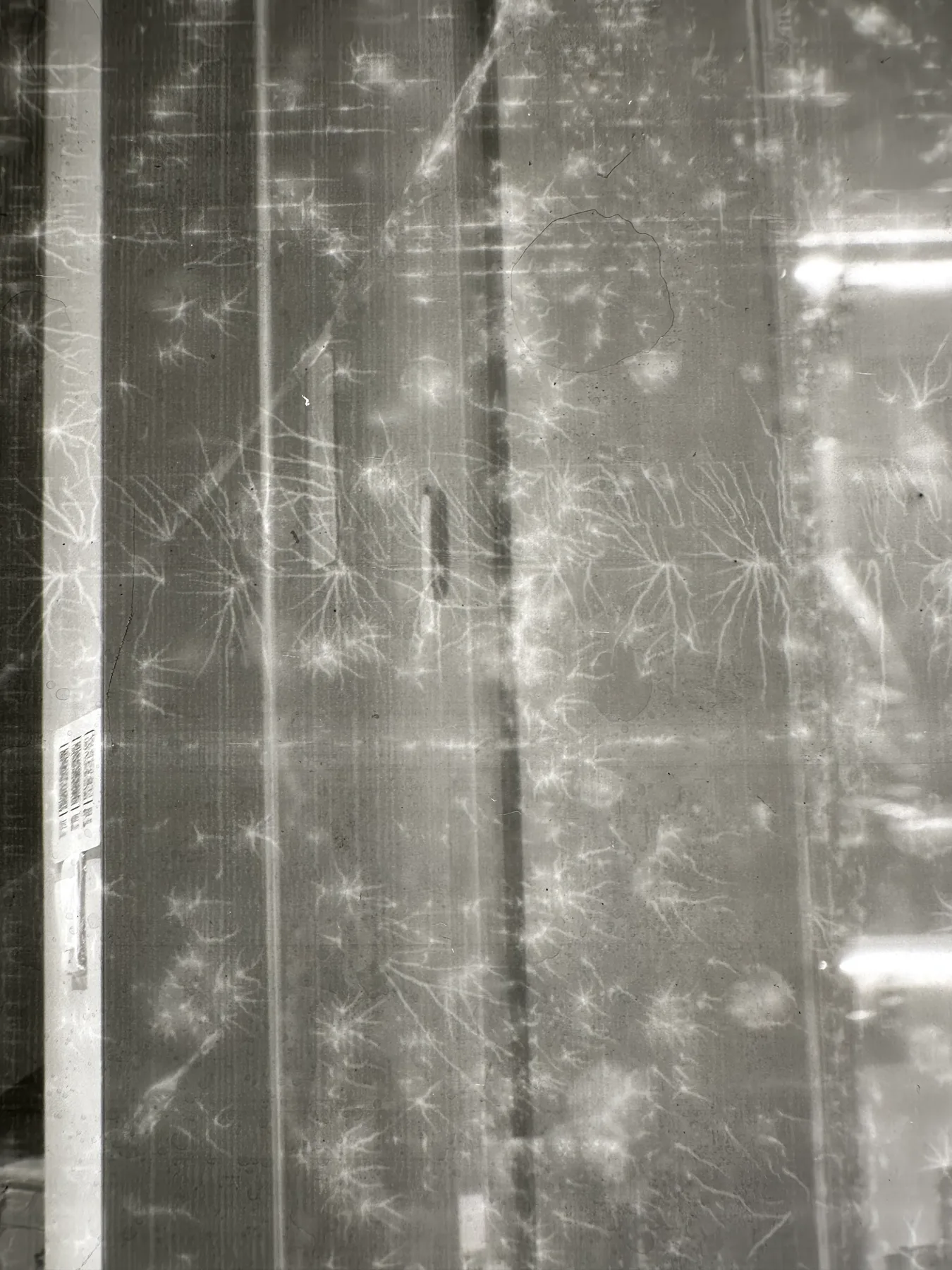
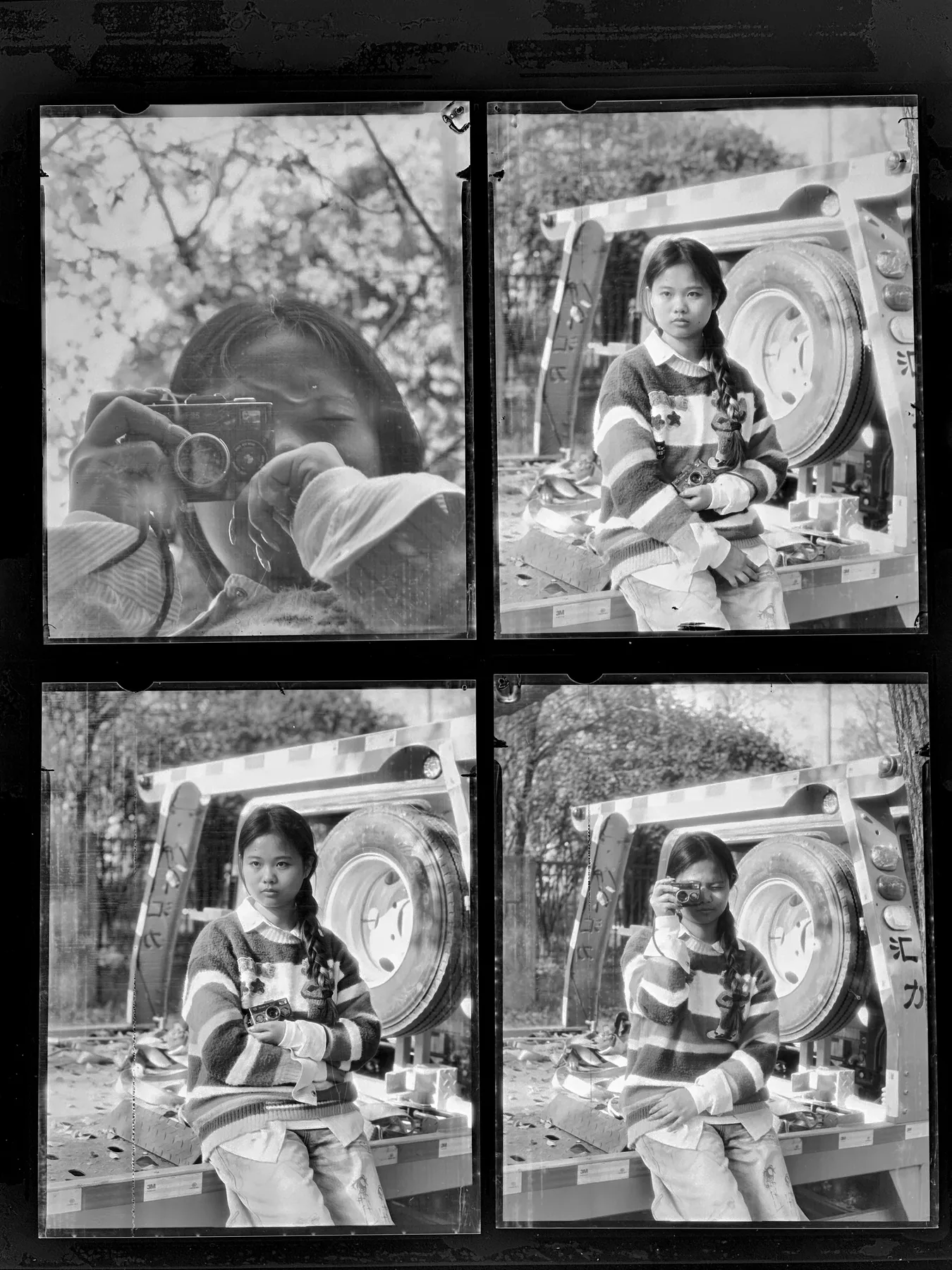
Between May and June 2026, LLL moved film production wholesale into its lens factory in Shangrao, putting testing, assembly and QC for both lenses and film under one roof. The message it released around the same time comes down to this.
The film should have a recognizable character of its own. Contrast should stay consistent across lighting conditions. It should respond consistently across development conditions. It should be flexible when pushed. It should have no production defects.
That fifth condition in particular is why LLL keeps delaying the official launch. The company spelled out the condition itself: it will wait until its quality control is "more consistent, repeatable, and fully automated." Its current goal is to release its first commercial black-and-white film within 2026, and test batches will likely go first to selected retailers, reviewers and testers.
The K-14 revival, and the skepticism
One thing needs saying. The Kodachrome K-14 revival in LLL's announcement is in a different category from the rest. Kodak itself has said more than once that it is "realistically impossible," because the chemical ingredients and the processing infrastructure are gone. It is safer to stay skeptical about how far LLL can get with its own line. The peel-apart instant film is an ambitious goal too, and there is no telling yet when an actual product might appear.
More than lenses: two camera projects
LLL's business is not only lenses and film. It is running two camera projects as well.
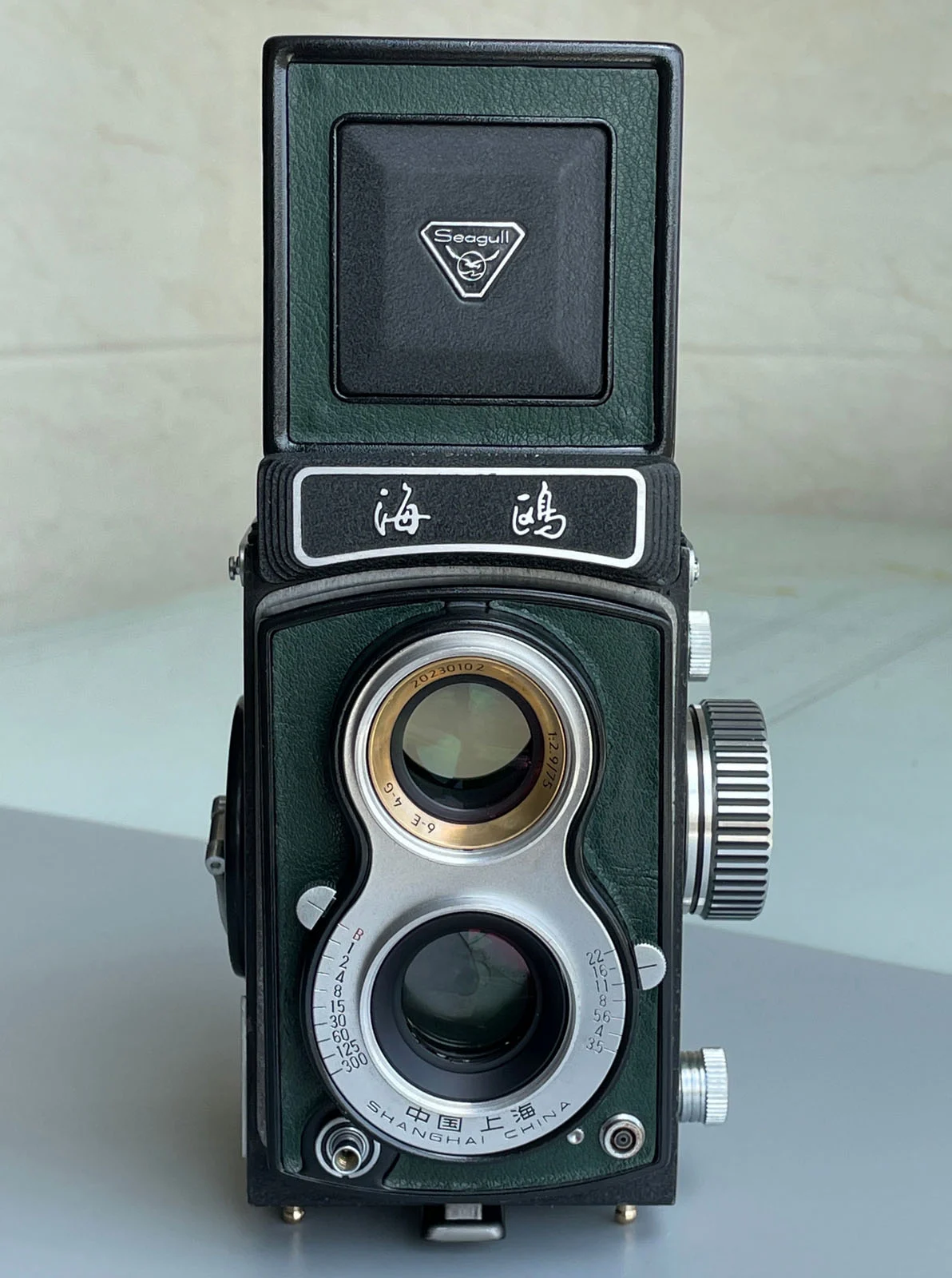
The first is the Seagull TLR Upgrade Project, an upgrade program for China's Seagull 4 TLR. It replaces the original 75mm f/3.5 lens with a new one built to a 75mm f/3.5 Planar formula (down to the same glass chemistry and coatings, as you would expect from LLL), overhauls the internal mechanics and remakes the optical parts. It also upgrades the focusing screen with a remade Hasselblad/Minolta Acute Matte screen and adds a new pressure plate that holds the film flatter against the optical axis. Put simply, it rebuilds an old mid-range TLR "to LLL's formula." It is currently LLL's main camera line.
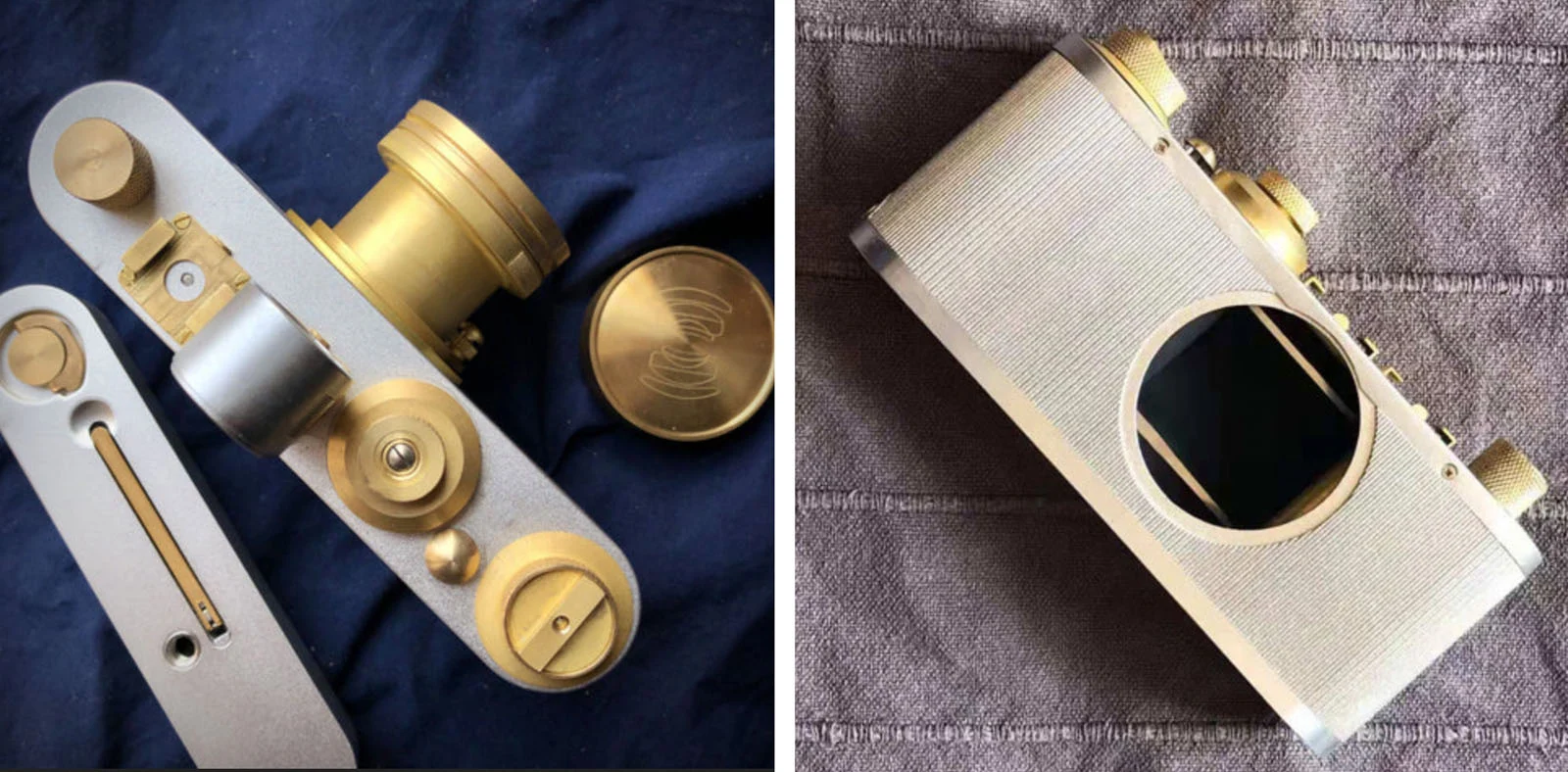
The second is the Standard Camera Project, a Barnack-style screw-mount rangefinder based on the Leica III. The first photos leaked in 2022. After the last update in January 2023, LLL put it on hold, calling it "financially unrealistic at our current production and assembly scale." It has not been scrapped. The company says it will come back to it once the Seagull upgrade and the film are established.
Another strand in China's film scene
What makes this interesting is where LLL is starting from. Film companies are not usually optics companies. Here is a company that restored vintage optics down to the glass formula, now working on film's formulas, crystals and dyes.
China's film market already has Lucky rebuilding color film with its own formulas, Shanghai GP3 in uninterrupted production, and Reflx Lab respooling cinema film for still cameras. LLL is jumping in by building its own machines first and keeping formulas, coating and QC entirely in-house. One more company is going after the same gap in the same market, by a different road.
Will we be holding the first roll of its black-and-white film before 2026 is out? How did it solve the static on 8×10? Can K-14 really come back? We will be watching for a while.
Summary
- Light Lens Lab (LLL) is a Chinese optics company that makes 1:1 replicas of vintage Leica lenses. Founded in Shangrao in 2018.
- Officially announced its film manufacturing plans on January 29, 2025, with an ambitious scope running from T-grain black-and-white to a K-14 revival.
- Formulas, automated equipment and the QC line are all developed in-house. Self-sufficiency is the core message.
- Stabilized the V3 black-and-white emulsion in May and June 2025 (ASA 125, antihalation layer, 380 to 700nm spectral sensitivity). Started a prototype line in June.
- From late 2025 to early 2026, reported real production problems, including static in 8×10 coating and scratches on 4×5. Official launch postponed.
- Merged film production into the lens factory in May and June 2026. The first black-and-white film is targeted for release within 2026, but the schedule is still fluid.
- The camera business centers on the Seagull TLR Upgrade Project. The Barnack-style Standard Camera is on hold.
- The film brand name is still unannounced after a year and a half. No plans for import into Korea have been confirmed.
Sources: Light Lens Lab official blog, Upcoming Projects, Film Project Announcement, Seagull TLR Upgrade Project, About Us. The technical figures, timelines and examples cited here were cross-checked against these primary sources and against reporting by PetaPixel, Kosmo Foto and Photo Rumors. All images and diagrams in this article are Light Lens Lab material; if reused, please credit © Light Lens Lab. Plans for import and distribution in Korea need separate confirmation.