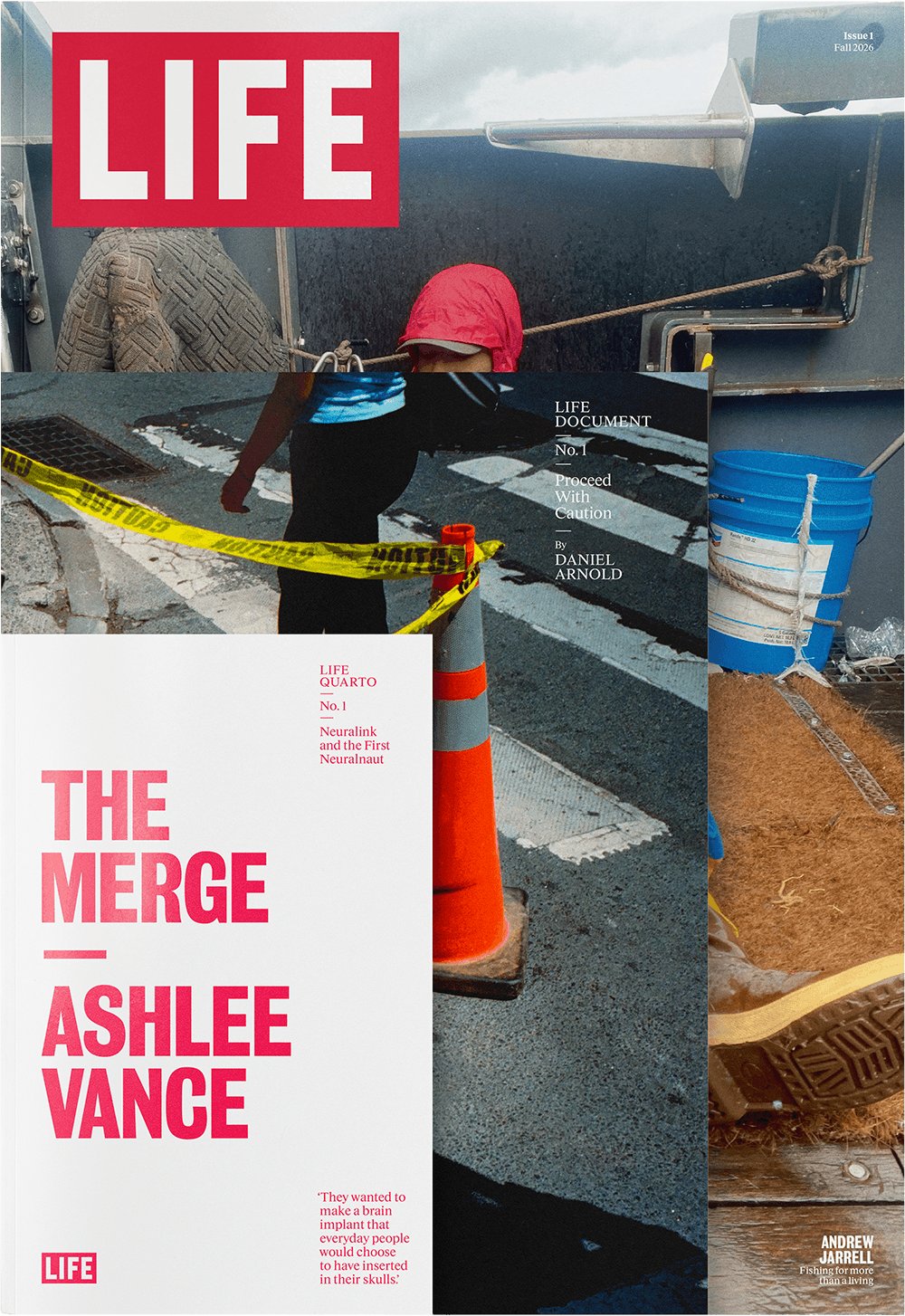
The cover of LIFE's first issue in 1936 showed a concrete structure at a dam construction site in Montana. The first cover of the new issue No. 1, published 90 years later, shows a fisherman on the deck of an Alaskan boat, holding a cod in his arms.
The photo magazine LIFE returned to print in the US on November 23. Here is what the new LIFE is, whether you can get a copy outside the US, and what the old LIFE left behind in photography.
248 pages, four times a year
Issue No. 1 is titled Where Are We Now? It runs 248 pages in a large format, 11 by 16 inches (about 28 by 41 cm). Each copy costs $45, and a new issue comes out every three months.
It carries no print advertising. Issue No. 1 was sponsored by the electric-vehicle maker Rivian and the software company Figma. More than 120 photographers and writers worked on it.
The editor in chief is Hugo Lindgren, a former editor at The New York Times Magazine, and the creative director is Richard Turley. The magazine is published by Bedford Media, the company of model Karlie Kloss and her husband, Joshua Kushner. In March 2024 it signed a deal with Dotdash Meredith, the holder of the LIFE brand, and announced the revival. The old LIFE's photo and article archive is still owned by Dotdash Meredith.
Six covers
Issue No. 1 comes in six covers. The subject of the first, Andrew Jarrell, is a commercial fisherman in Alaska. LIFE followed him on his ninth winter of cod fishing. The story is titled Harvesting Food at the Edge of the World.
Jarrell catches cod in pots in the Bering Sea, about 100 miles from Dutch Harbor, Alaska. Over three days of fishing, the four-person boat hauled up its pots nearly 900 times. Jarrell took the cover story's photographs himself, and Will Sennott wrote the text.
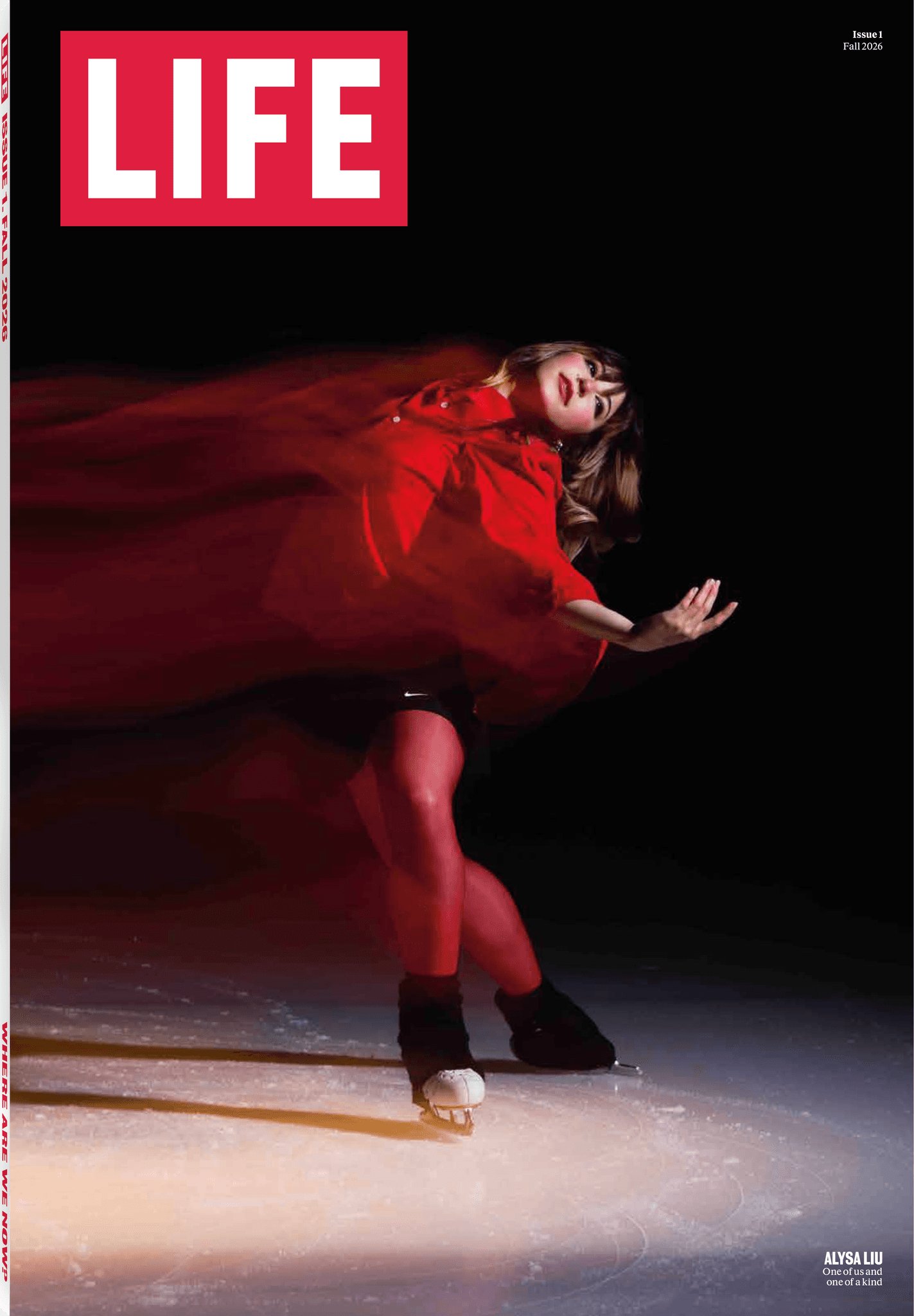
Another cover story is about the figure skater Alysa Liu, who won the 2025 World Championships, the first American woman to do so in 19 years. The film director Spike Jonze took the photographs for this cover story, and Bonnie Tsui wrote the text.
Photo stories follow inside. There is The Mountain Still Has Something to Give, photographed by Stacy Kranitz and written by Mesha Maren, and Sasha Arutyunova, Walker Bankson, Melchizedek Gayle, Kobe Wagstaff and Peter Fisher also have photographs in the issue. Some pieces are ordinary even in their titles, such as No. 23 in Line at the DMV.
The first issue in 1936 put a dam on its cover and showed the lives of the people building it inside. The new No. 1 puts a working man on its first cover.
Can you get a copy outside the US?
For now it is sold at some bookstores and newsstands in the US. Subscriptions are taken on the LIFE website (new.life.com).
- One-year subscription $149. Four issues a year. Subscribers who receive issue No. 1 also get a separately printed book, the Reader.
- Founding member $356 a year. Along with the magazine, members are invited first to the screenings and gatherings LIFE holds.
Check the website before subscribing to see whether they ship abroad.
What the old LIFE left in photography
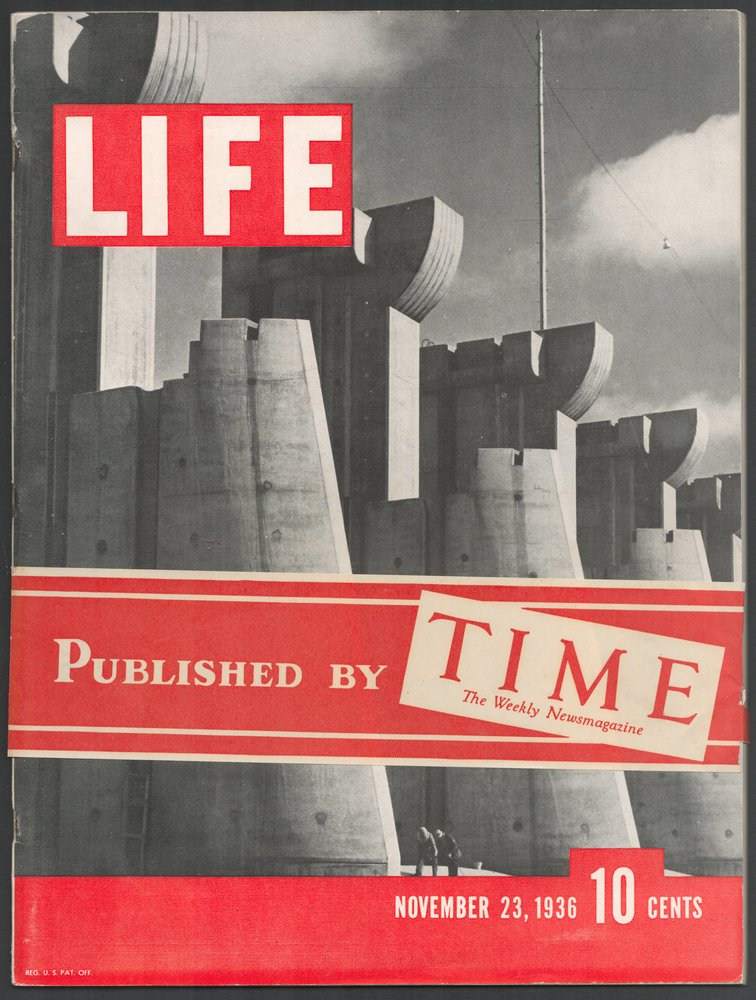
The man behind LIFE in 1936 was Henry Luce, a co-founder of the weekly news magazine Time. He bought the name of an old humor magazine called LIFE and launched a new one under it. It gave as much space to photographs as to words.
The first issue cost 10 cents. The cover was a spillway, the concrete structure that carries away overflow water, photographed by Margaret Bourke-White at the Fort Peck Dam construction site in Montana. Inside ran her photo essay on the people at the dam site and five pages of photographs by Alfred Eisenstaedt. Within four months of its launch, LIFE was selling more than a million copies a week.
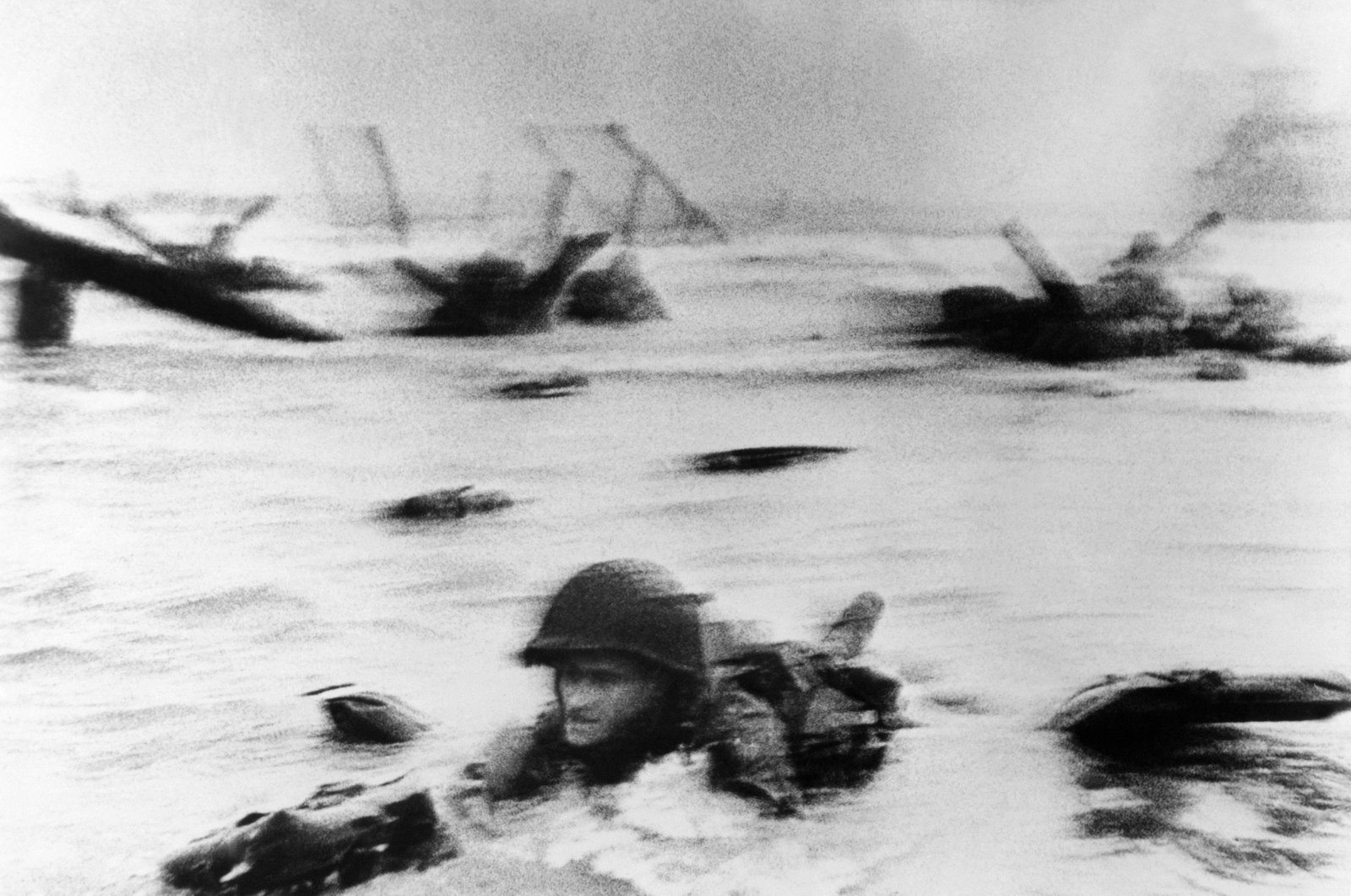
LIFE also ran Robert Capa's photographs from the Normandy landings on June 6, 1944. Only a handful of frames survived, and many of those were out of focus. LIFE wrote that Capa's hands had been shaking, and Capa denied it. His 1947 memoir is titled Slightly Out of Focus. LIFE also published Eisenstaedt's photograph of a sailor kissing a nurse in Times Square on August 14, 1945.
The weekly LIFE ended with the issue of December 29, 1972. It then came out as a monthly from October 1978 to May 2000, and from October 2004 to April 2007 as a weekly supplement inserted into newspapers. Special editions appeared in between, but this is the first regularly published print magazine in 19 years.
A reader in 1936 bought this magazine for 10 cents. A reader in 2026 pays $45.