Myoung Ho Lee sets up a large white canvas behind a tree and then photographs it. Two solo exhibitions by Lee, known for this 〈Tree〉 series, are on view in Seoul at the same time. 《Between or Beyond Act and Scene》 opened on October 21 at Savina Museum in Eunpyeong-gu, and 《(no)thing》 on October 29 at Gallery Hyundai in Jongno-gu. This article is less about the exhibition dates than about how one of those photographs gets made. It draws on the two institutions' exhibition materials, press coverage and interviews with the artist.
How the two shows divide the work
The two exhibitions differ in character. Savina Museum looks back over some 20 years of work, from the 〈Tree...〉 series begun in 2004 to the new 〈Kiribati〉. The show is built around a concept the artist named the PHOTOGRAPHY-ACT PROJECT, with 47 photographs hung on the second and third floors of the special exhibition galleries. According to Edaily, this is also the first time Lee has laid out in full and made public the concept diagram that organizes the ideas behind the work.
Gallery Hyundai built its show from about 30 recent works. It is Lee's first solo exhibition there in eight years, since 《Myoung Ho Lee: Nothing, But》 in 2018. 〈Kiribati〉 (2026) is on the first floor and in the basement, and the second floor holds 〈Heritage〉 (2024–2026), photographs of a Chinese scholar tree at Deoksugung Palace. Recent works in which the forms in the photograph have been scraped away with a knife hang here as well. At Savina you see a method refined over 20 years; at Gallery Hyundai, how far that method has changed lately.
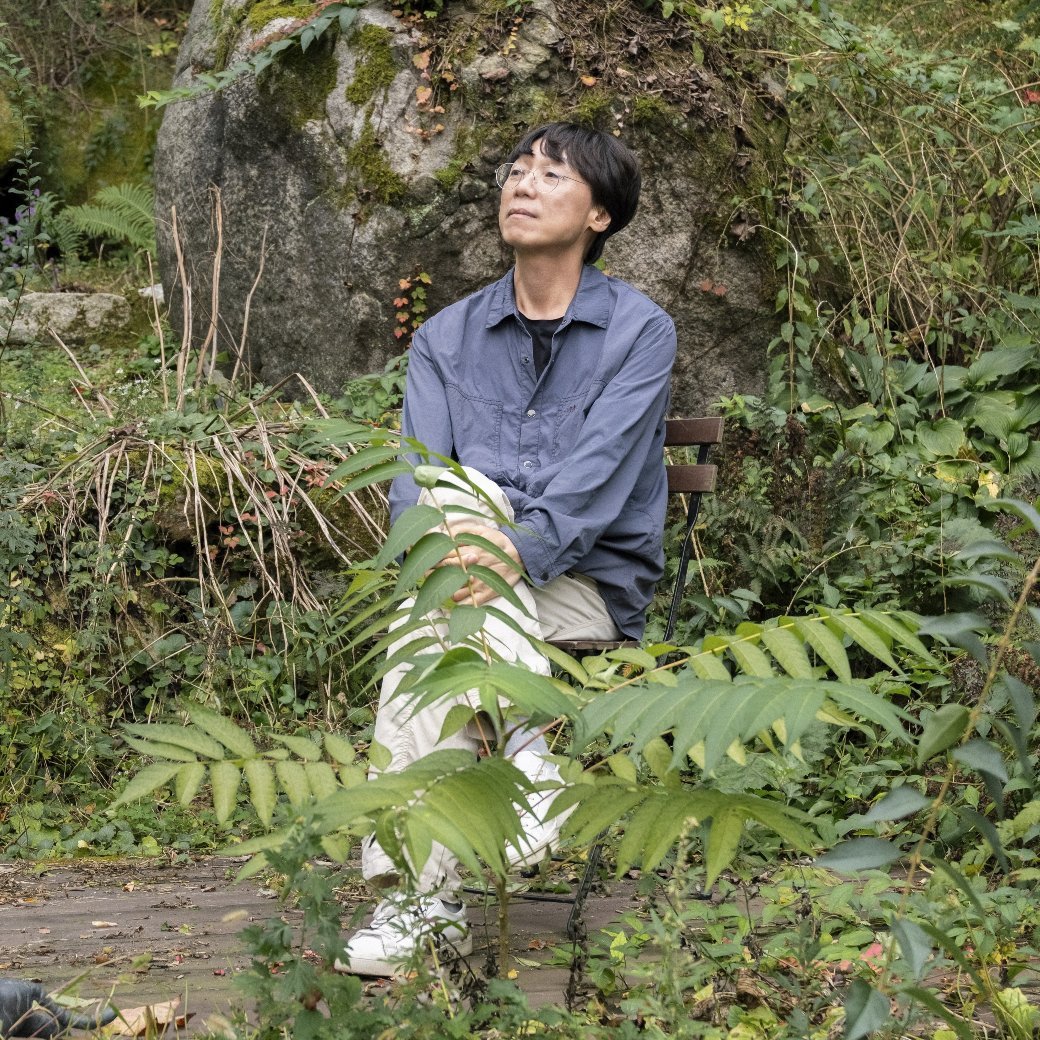
What it takes to raise one canvas
Myoung Ho Lee was born in Daejeon in 1975 and studied photography at Chung-Ang University, both as an undergraduate and in graduate school. 〈Tree〉 began with a single tree on that campus. According to Monthly JoongAng (September 2024 issue), Lee started the tree work in 2004, right after entering graduate school. The first tree was a zelkova beside a campus bench. With help from friends in the sculpture department, Lee stacked four or five tiers of scaffolding behind the tree, made a canvas from unbleached cotton and photographed it.
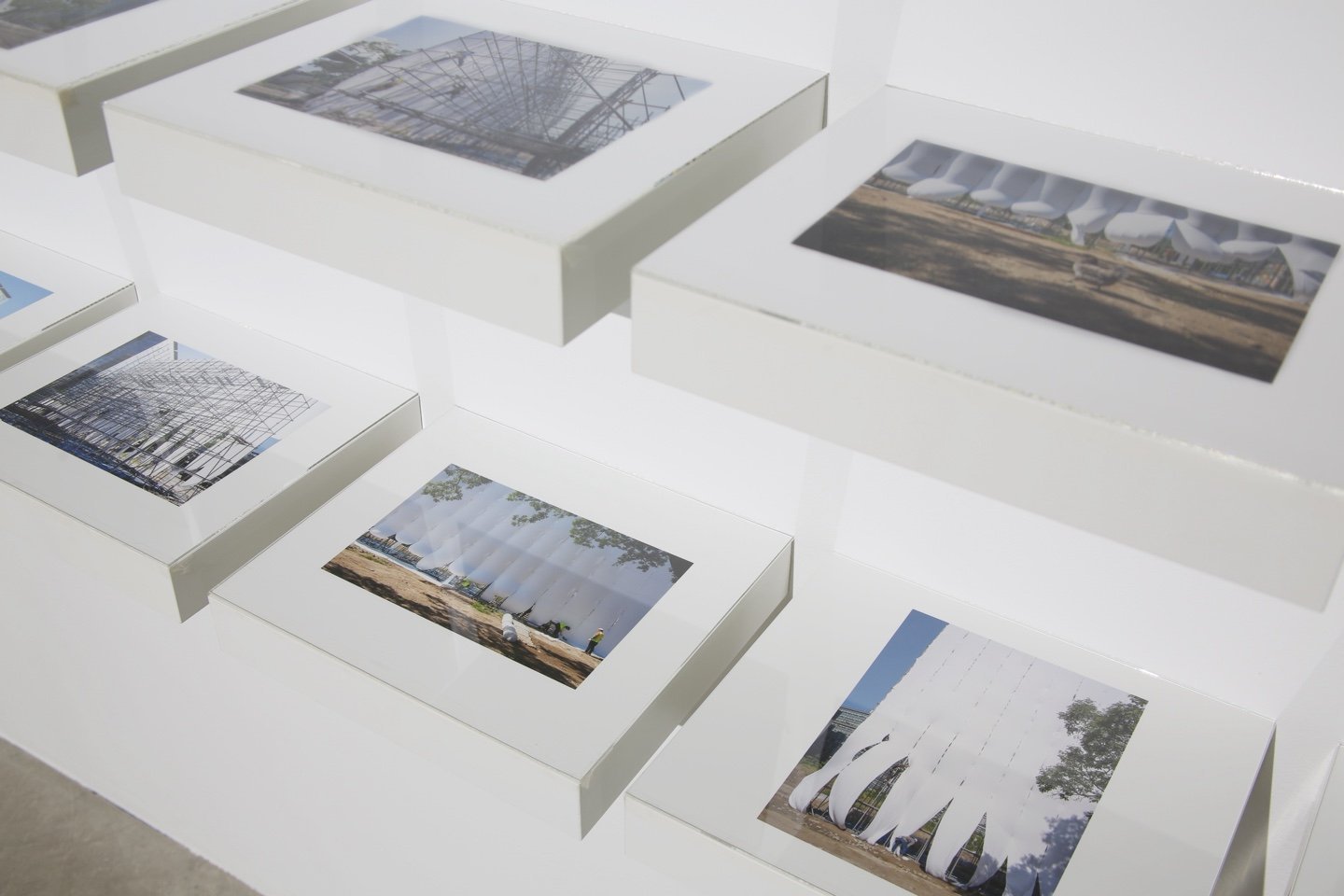
The work grew in scale from there. The press release for Yossi Milo Gallery's 2009 〈Tree〉 exhibition in New York stated that the canvases reach about 60 by 45 feet (about 18 by 14 m), and that a production crew and heavy cranes are brought in to raise them. A Kukmin Ilbo review this year singled out the installation of cloth more than 10 m tall as a performance element of the work. It takes a lot of people, too. Monthly JoongAng reported that the Mongolia shoot involved 11 people, counting staff, local guides and interpreters, and lasted two weeks.

The Savina show does not hide this process. Photographs documenting the shoots are displayed alongside the works.
The trees once shot on 4×5 film
So what does Lee shoot with, in front of a canvas raised like this? The 2009 Yossi Milo press release said the trees were photographed with a 4×5 camera across different seasons and times of day. Lee's own account comes from a February 2015 interview with Canon Korea. Because of the nature of the work, Lee said, a 4×5 film camera serves as the main camera, while digital cameras such as the Canon EOS 5D Mark II are used to record the process and the installation views. As a student, Lee mostly used a film EOS 5.
Asked why film, Lee answered that you can shoot only a few frames and can't see the results right away, so, in our translation, "I end up working all the more carefully." Lee also pointed to a texture different from digital, and to accidents no one can predict. In the same interview, Lee brought up the 〈Sea〉 (바다) series, shot in the desert. Film should be stored below room temperature, but the desert was so hot that the film's characteristic curve shifted and the colors went off. Since the process had also been recorded digitally, the colors could have been matched later, but Lee said that was not done. The shifted colors were treated as part of the work too, because, Lee said, the process matters more than the result.
The people in front of the Deoksugung scholar tree
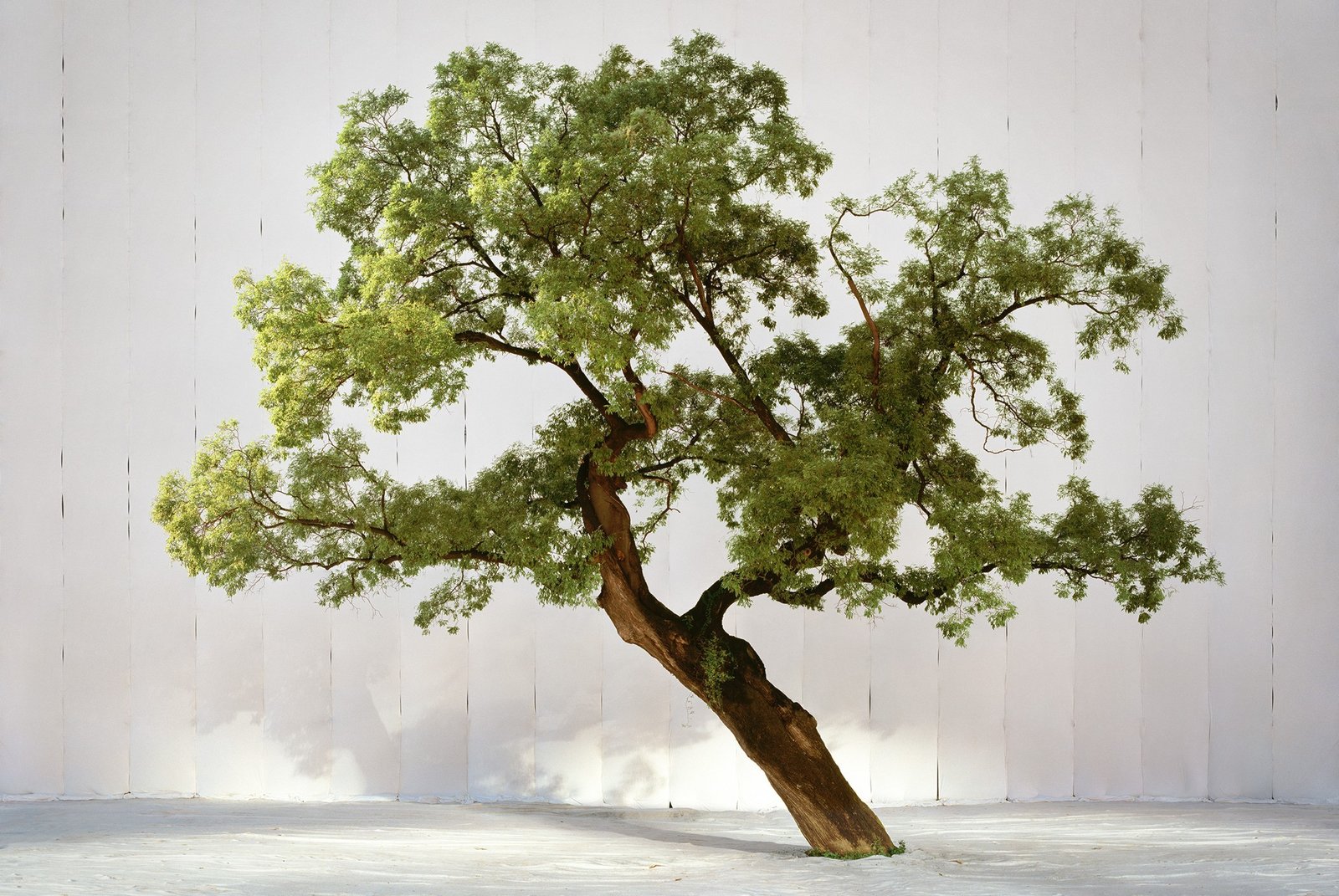
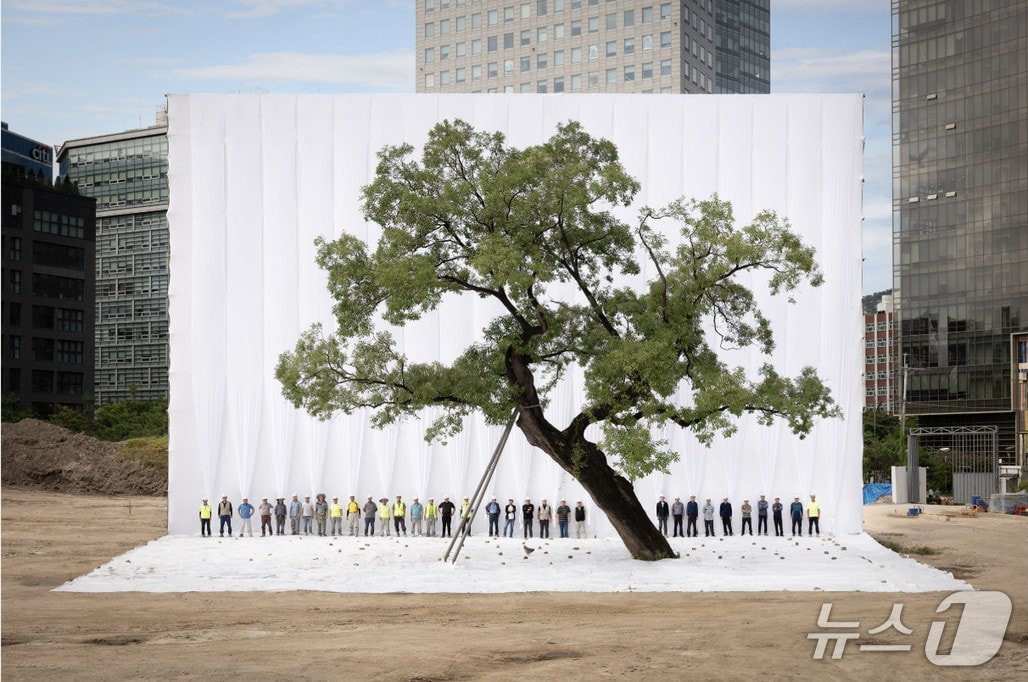
〈Heritage〉 is a series photographing the Chinese scholar tree on the site of Seonwonjeon Hall at Deoksugung Palace. According to the Korea Economic Daily, Lee photographed the same tree through changing seasons and weather. Lee told Handmaker, in our translation, "Trees have faces too." Most trees face south, Lee explained, but this one has turned its face to the east. 〈Heritage...... #7_1〉, on Gallery Hyundai's second floor, is a large work that spreads an image looking straight down on the tree across nine canvases.
The series also includes a work in which the crew stand in a row in front of the canvas and are photographed together: 〈Heritage #7_Workers〉, hanging at Savina Museum. The number of people the work took is right there in the frame.
Kiribati: a net raised in the sea
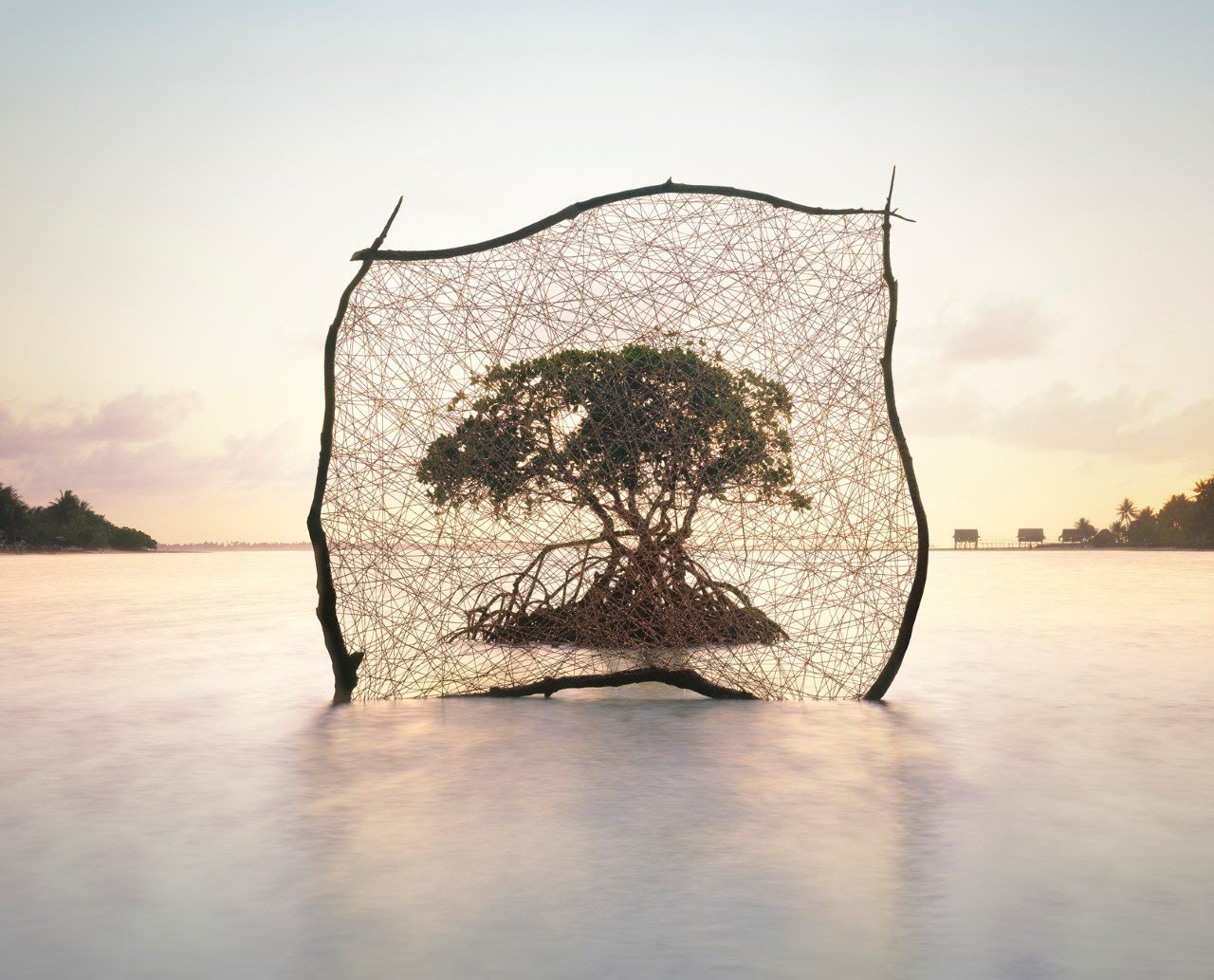
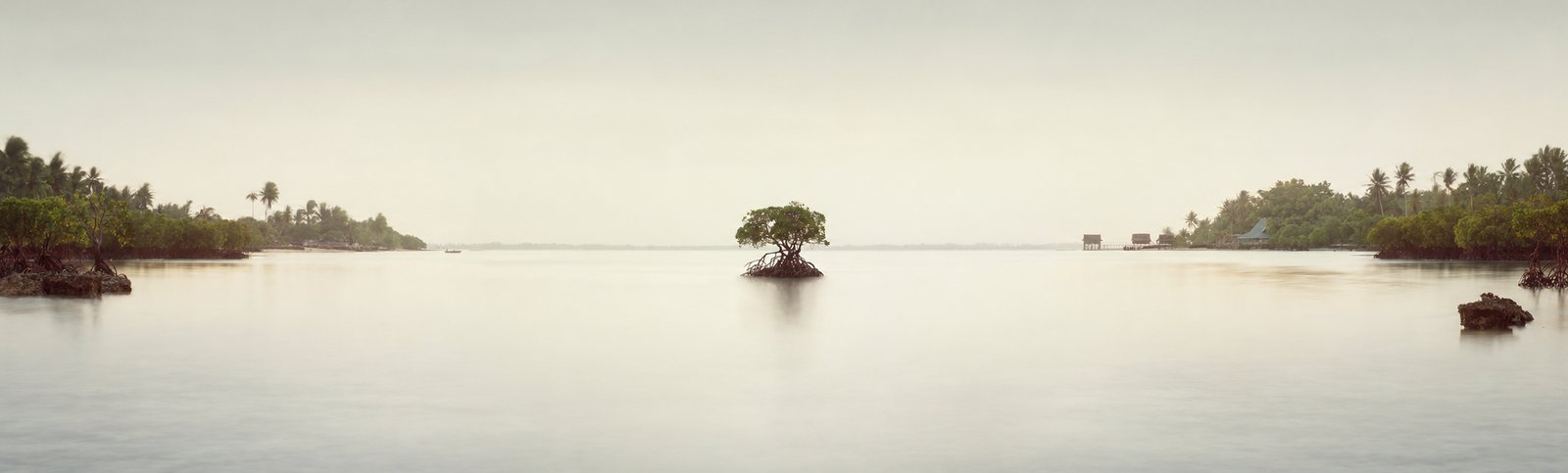
〈Kiribati〉 began with news about Kiribati that Lee happened to come across in 2021. According to Edaily (November 3), the plan was to leave right away, but the preparations alone took four years. Lee flew out in January 2025 and reached the island 60 hours later, after changing planes four times. It was a big undertaking, with 12 studio staff staying for a little over two months.
This time Lee used coconut fiber instead of white cloth. Cords made from the fiber were woven into a 5×5 m net screen, which Edaily called "a loose-knit canvas." The screen was set up in front of mangrove trees. A photo caption in the same article says the net was hung both in front of and behind a tree for the shots. According to Handmaker, the water was shallow, so the crew waded in and worked as the tide came and went. The frames were built from wood together with local residents, and the coconut fiber was loosely woven over them. Handmaker added that no actual trees were removed and no images were composited; different scenes were made by moving the structure from place to place.
Long exposures were used in this series as well. Edaily wrote that the waves, layered through long exposure, make the pictures look like paintings. Gallery Hyundai describes 〈Work View; Kiribati #1_1_1_2〉, in the basement, as a work photographed with the sea of Kiribati itself serving as one canvas. After 20 years of raising canvases, Lee this time handed that job to the sea.
Erasing after the shot
Raising a white canvas takes ropes, poles and cranes. So why are none of them visible in the finished works? The 2009 Yossi Milo press release said that supports such as ropes and poles are removed afterward with minimal digital retouching. What Lee ruled out in the 2015 interview was color correction. Removing supports and matching colors are different tasks, so the two accounts do not contradict each other.
In the recent work, what gets erased has changed. At Gallery Hyundai, 〈Tree #8_2〉, 〈Tree #15_2〉, 〈Tree #17_2〉 and 〈Tree #20〉 are works in which the tree in the photograph has been scraped away. In the basement, 〈Kiribati #1_2〉, 〈Kiribati #2_2〉 and 〈Kiribati #3_3〉 likewise have forms lifted out of the image. According to an Edaily photo caption, the scraping is done with surgical scalpels and architectural knives. Handmaker reported that the Kiribati works were printed by a pigment process, which lays ink onto paper, and then only the trees were scraped away with a blade. Each piece takes from a week to a month, and one wrong stroke means reprinting and starting over. The wooden frames for the recent 〈Tree〉 works were made with master woodworker Yoo Jin-kyung.
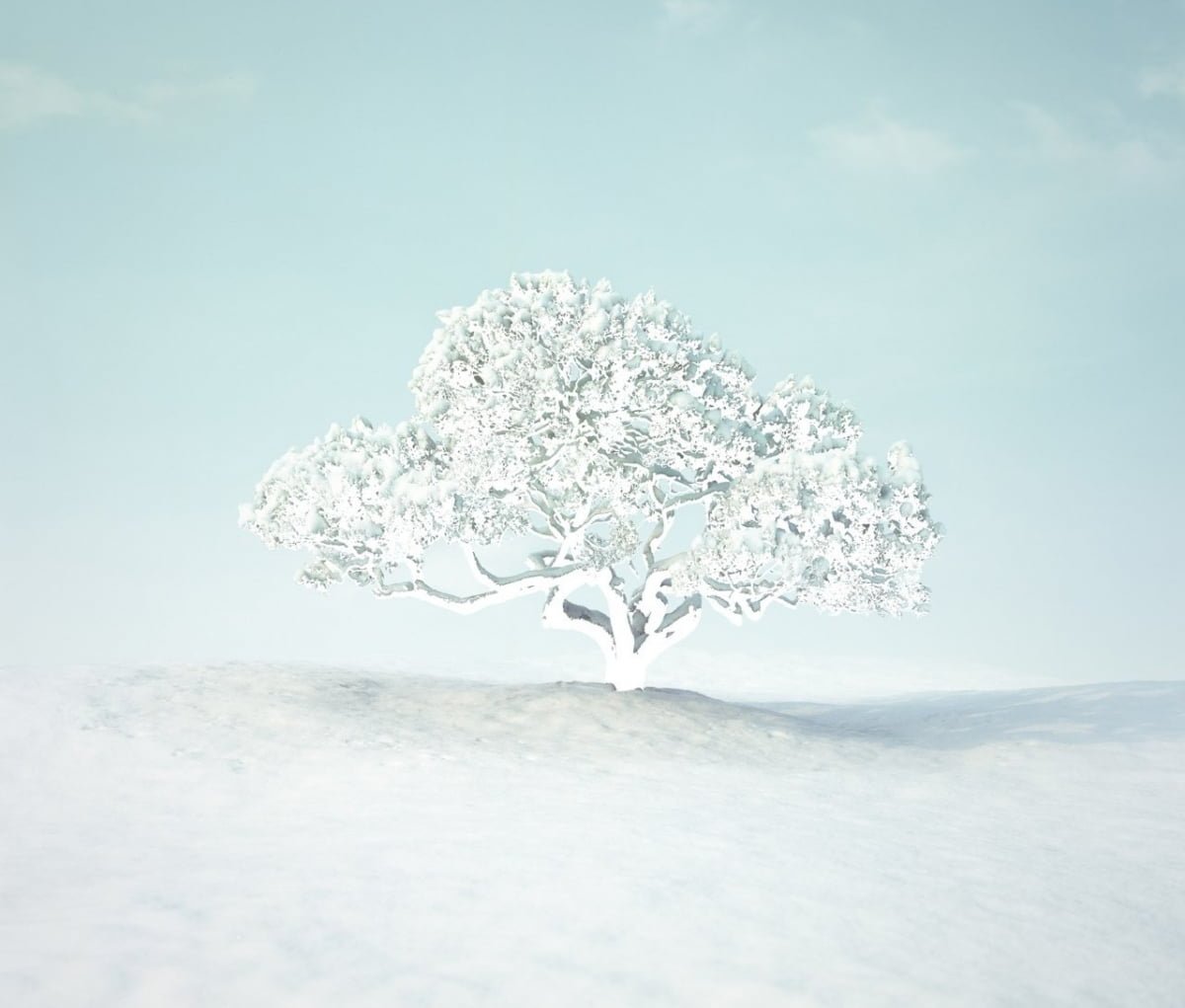
Scraping a photograph with a scalpel is not new for Lee. According to Sports Seoul, the nine works in a series of the same name shown in 《Revealing》 (드러내다), a 2020 exhibition organized by the GoEun Museum of Photography in Busan, were made by scraping the image off printed photographs with a medical scalpel. They reportedly looked like white paper set in a frame. This time the background stays and only the tree is scraped away. Taking the 2009 press release at its word, Lee once erased from the frame the equipment brought in to photograph the tree. Now it is the tree that gets erased.
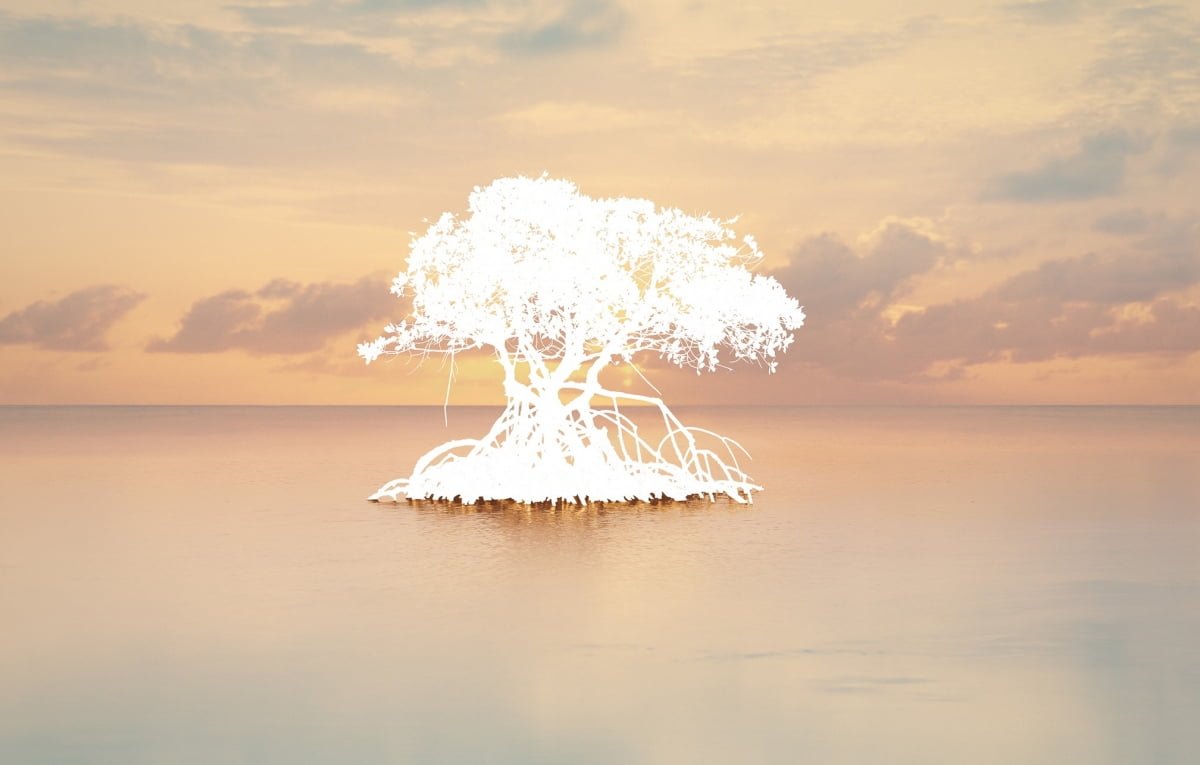
Gallery Hyundai's exhibition text quotes Lee as follows, in our translation: "In the end, the more you try to reveal, the more you take away, and conversely, the more you remove, the more is revealed. That paradox is what interests me." Gallery Hyundai and the Korea Economic Daily read the work as a paradox of presence and absence, of revealing and erasing. Kukmin Ilbo sees it a little differently. Its November 4 review ran under the headline "No Change, Only Variations" and said it was a pity that even the attempt at scraping with a knife did not leave the impression of a real transformation.
Two titles in one concept diagram
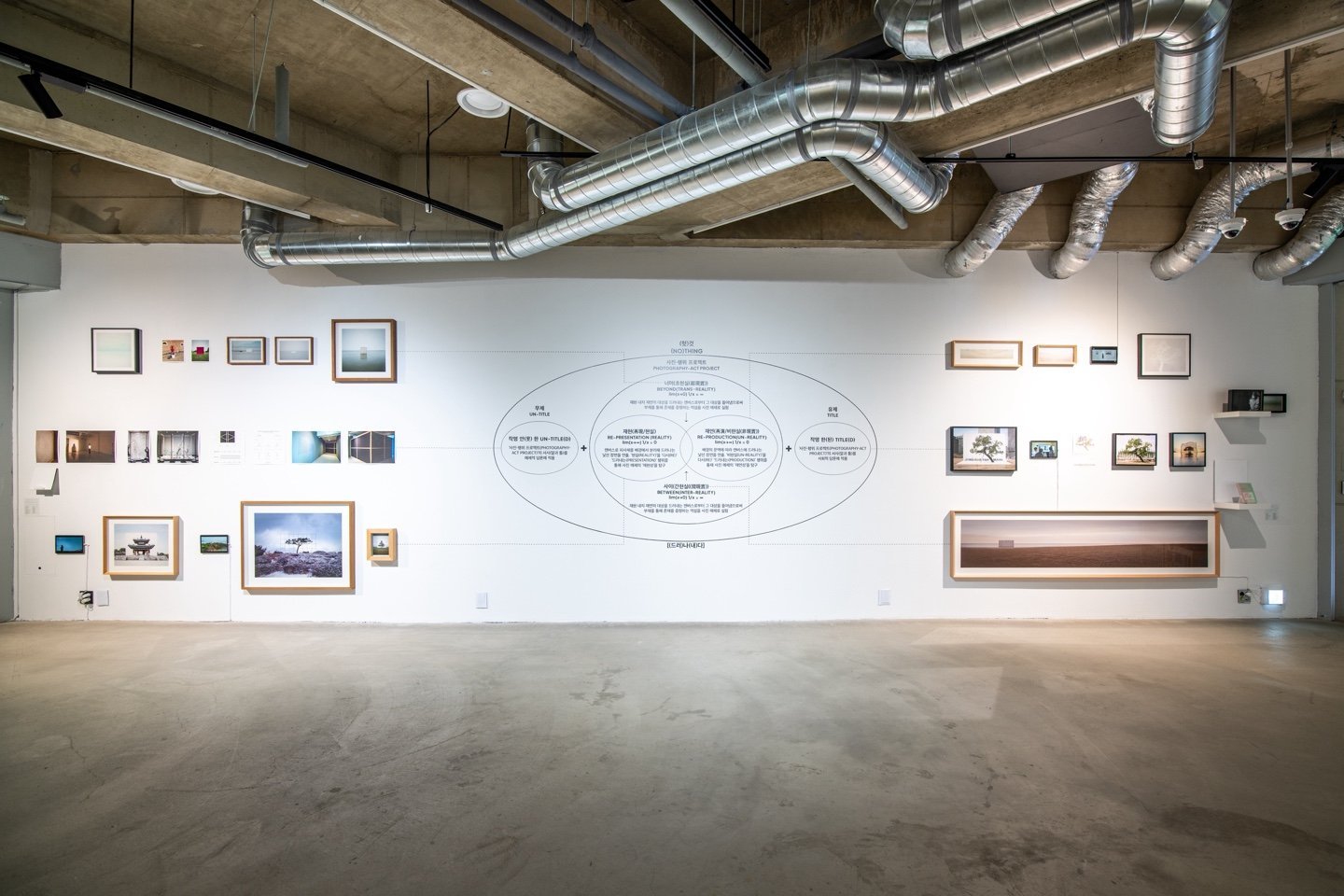
Savina Museum divides the series by floor. According to Handmaker, the second floor holds 〈Kiribati〉 and 〈Nothing But〉, a series of empty canvases, and the third floor holds 〈Heritage〉, the 〈Tree〉 works shot on Jeju and the concept diagram. K-VIBE explained that in the Korean title of the exhibition, the "curtain" (장막) stands for the canvas and the "scene" (장면) for the subject. Museum director Lee Myung-ok described the concept diagram as a "map" that shows at a glance the content and form of more than 20 years of accumulated work and the relationships among the series.
Read the diagram in the published installation photos and you find (NO)THING written at the very top. Below it sits PHOTOGRAPHY-ACT PROJECT, and BEYOND and BETWEEN appear at the top and bottom of the inner circle. At the center, two circles, RE-PRESENTATION and RE-PRODUCTION, overlap. The titles of both the Gallery Hyundai show and the Savina show fit inside this one drawing.
The time before and after the shutter
In Myoung Ho Lee's work, pressing the shutter is one step in a long process. Before it comes stacking scaffolding and raising cloth, and in the case of Kiribati, four years of preparation. After it comes the knife work, a week to a month for each piece. In the Handmaker article, Lee described taking a photograph as dipping film into a single point in time and space: in our translation, "the act of briefly dipping film in and taking it out." Anyone who has handled film can picture it right away. When we shoot a roll, what do we prepare before the shutter, and what do we take away after the shot? At Savina you can spend longer with the time before; at Gallery Hyundai, with the time after.
Visitor information
- 《(no)thing》 Gallery Hyundai, 14 Samcheong-ro, Jongno-gu, Seoul. Thursday, October 29, to Sunday, December 20, 2026. Tuesday to Sunday, 10:00 to 18:00; closed Mondays. About 30 recent works
- 《Between or Beyond Act and Scene》 Savina Museum, special exhibition galleries on the 2nd and 3rd floors, 93 Jingwan 1-ro, Eunpyeong-gu, Seoul. Wednesday, October 21, to Sunday, December 13, 2026. Tuesday to Sunday, 10:00 to 18:00 (last entry 17:00); closed Mondays. 47 photographs
- Admission Check each venue's information
- Information Gallery Hyundai exhibition page ↗ · Savina Museum exhibition page ↗
The Savina Museum exhibition page takes bookings through Naver Booking. We recommend checking each venue's information once more before you go.