〈Deborah Turbeville: Atmosphere〉, the first solo exhibition in Korea of Deborah Turbeville (1932–2013), is on view at Piknic in Jung-gu, Seoul. It opened on October 23 and runs through February 28, 2027. After taking a picture, Turbeville deliberately damaged the negatives and prints, scratching, tearing and burning them, then taping them together. Using Piknic's exhibition notes, press coverage in Korea and materials from museums abroad, we followed that way of working.
Our October exhibitions list briefly covered the size of the show and the artist's background. This time we look at what was added and what was erased as a single photograph moved from the magazine page to the print, and from the print to the collage.
A bathhouse story for 〈Vogue〉
Turbeville worked as a fashion editor at magazines including 〈Harper's Bazaar〉 and 〈Mademoiselle〉. It was hard to find photographers who could shoot the scenes Turbeville imagined, so the fashion editor reportedly picked up a camera instead (Hyperallergic).
In May 1975, American 〈Vogue〉 ran a swimsuit story by Turbeville. The assignment came from art director Alexander Liberman. Turbeville posed five models in the Asser Levy bathhouse, a shuttered public bath in New York. Once the pages came out, complaints from readers followed. According to Huis Marseille, the photography museum in the Netherlands, some readers saw drugs or homosexuality in the scene, and others likened the bathhouse to a concentration camp gas chamber. Turbeville's answer was anticlimactic. It had simply been a matter, Turbeville said, of fitting five people side by side across a two-page spread. The story made Turbeville's name.
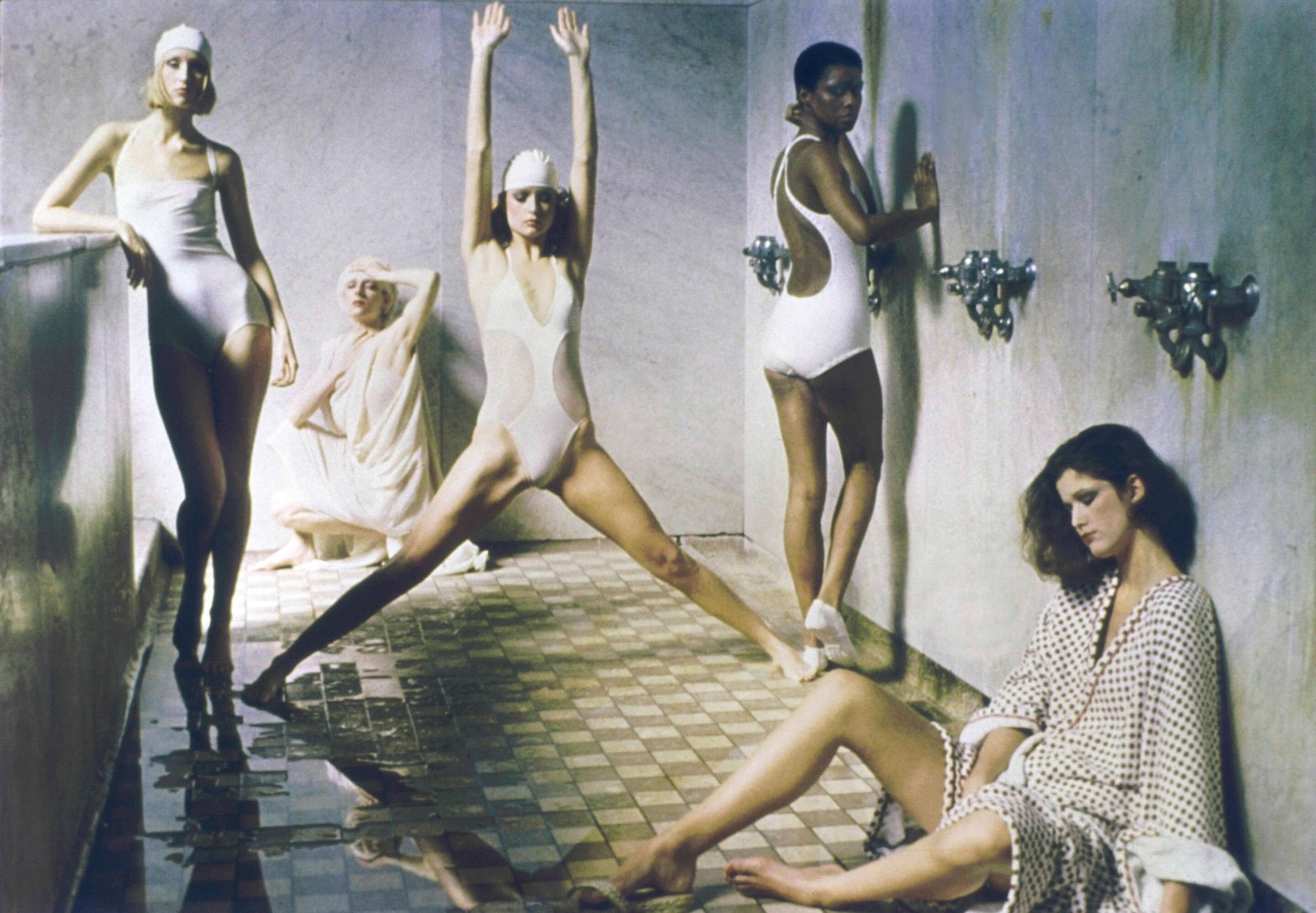
Readers who shoot film will find a detail worth noting in the collection records of the V&A in London. For an object from the 1975 bathhouse story, the materials and techniques field reads "Fresson colour print from original transparency." A transparency is the positive film you get by processing reversal film, more commonly called a slide. In other words, the scene that ran in color in 〈Vogue〉 was shot on reversal film.
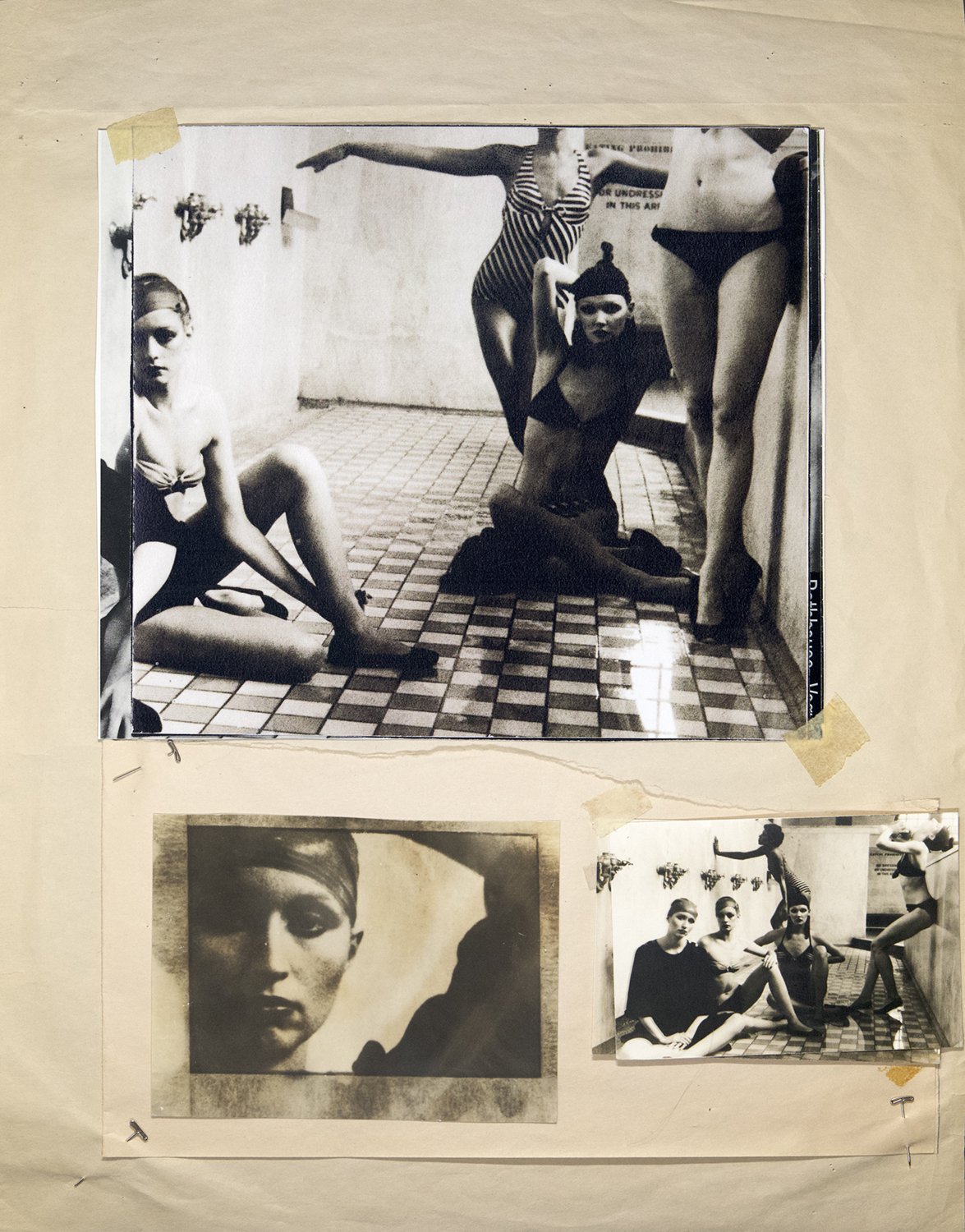
The same bathhouse comes back later in another form. Among the works Sweden's Moderna Museet has made public is a single sheet of paper with three black-and-white prints from the bathhouse mounted together. The date is given only as "after 1975." Even after the magazine ran the pictures, Turbeville kept taking them out and using them again. The Moderna Museet images in this article come from the press materials for 〈Photocollage〉, shown in Malmö from May to September this year.
Made, then destroyed
One remark of Turbeville's is quoted often: "I destroy the image after I've made it, obliterate it a little so you never have it completely there." The line appears in the press release for 〈Photocollage〉, which The Photographers' Gallery in London showed from October 2024 to February of the following year. The photography blog Art Blart reproduced the press release when it covered the show. Huis Marseille quotes the first part as well.
What was destroyed, and how, is described in some detail in museum materials. Start with the negatives. Moderna Museet writes that Turbeville scratched negatives when making fashion photographs and collages. A 2023 article in the British magazine 〈AnOther〉 is more specific: the negatives were smeared with dust, scratched, torn and overexposed.
The handwork did not stop at printing. According to Huis Marseille, Turbeville tore, scratched, burned and taped prints in the studio darkroom. That way, freshly made prints took on the wear of years and looked like photographs from another era. Moderna Museet adds that Turbeville often used unusual papers and experimented with uncommon processes, toning among them.
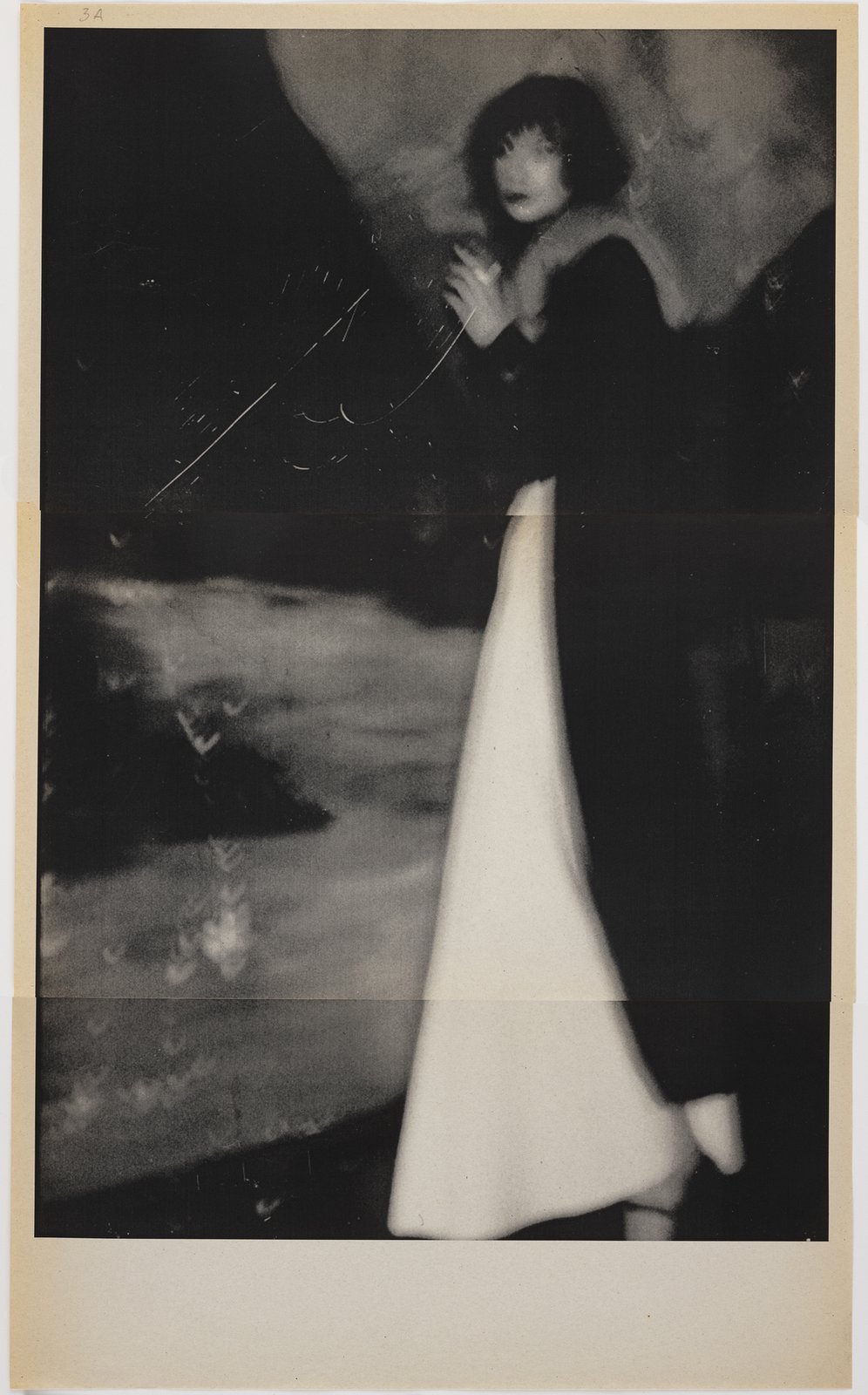
For anyone who handles film, a flaw on a negative is usually an accident. A scratch picked up during processing, or dust that settles while the film dries, shows up on the paper exactly as it is. Turbeville made those flaws on purpose. Where the damage goes changes the result. Scratch a negative, and the same wound appears on every print made from that film. Tear or burn a print, and only that one sheet changes. Turbeville did both.
Why go this far? In a 1982 interview with 〈Artograph〉, quoted by Moderna Museet, Turbeville objected to being called a romantic photographer. Turbeville wanted even soft focus and coarse grain to make the pictures look skewed, strange and eerie. Turbeville also described the process of something falling apart as the core of the work (Huis Marseille).
The same profile, six times
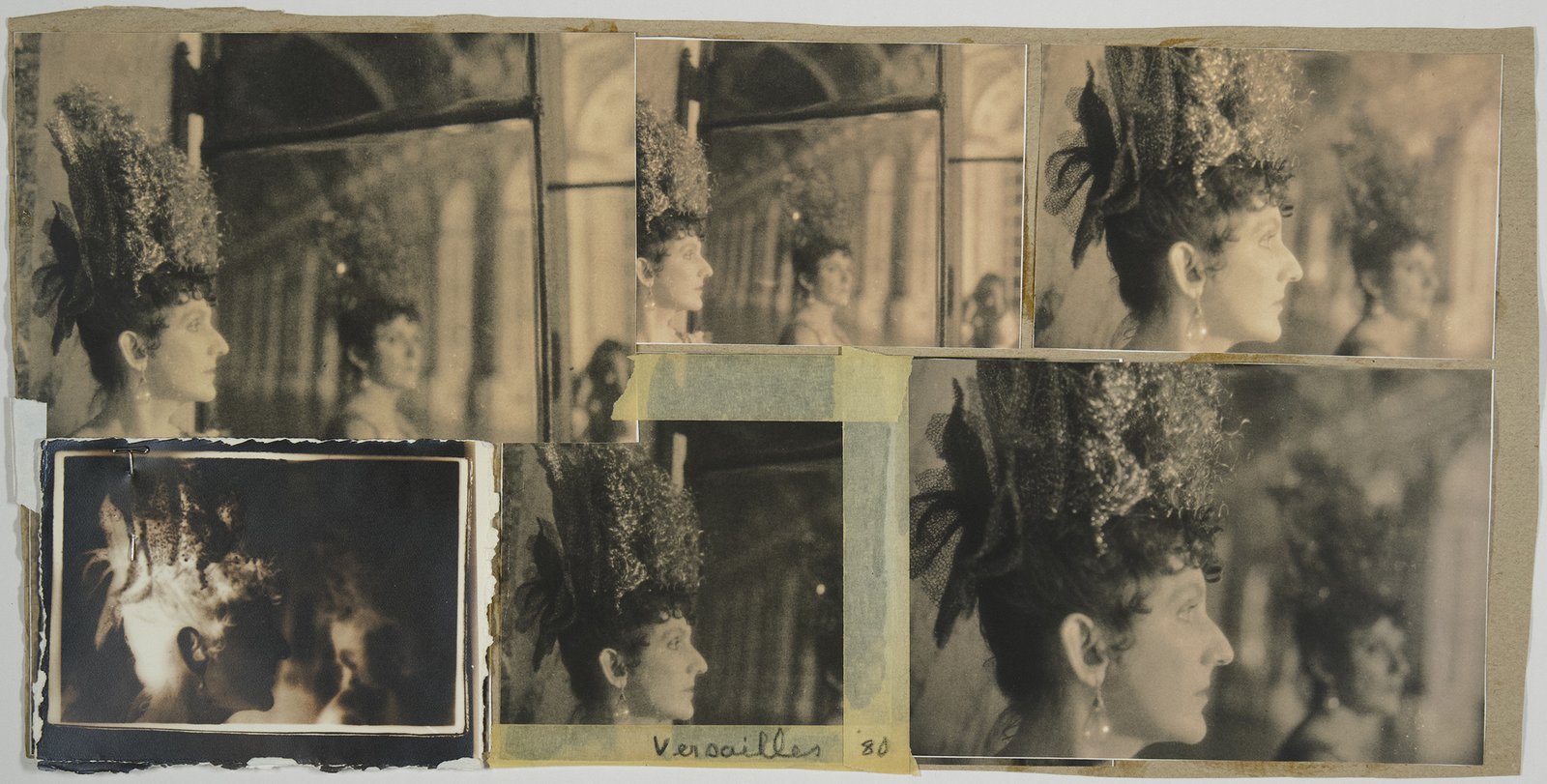
〈Unseen Versailles〉 began as a commission from Jacqueline Kennedy Onassis. The work's captions and handwritten notes give the year 1980, and the book of the same name came out in 1981. According to Huis Marseille, the book won an American Book Award. The Korea Herald described the work as photographs of furniture draped in cloth and worn statues rather than gilded rooms.
A sheet released by Moderna Museet shows how Turbeville handled prints in this project. The profile of a woman in a tall headdress was printed six times at different sizes and densities, and the prints were joined on a single board. Huis Marseille explains that where the edges of Turbeville's images seem to overlap, they carry the traces of repeated rephotographing, reprinting and reworking. Turbeville did not stop at printing a scene once.
Contact sheets, cut and pasted
The edges of the film show up often in Turbeville's work. A collage from the 〈Comme des Garçons〉 series, shot in Paris in 1980, is a good example. In the Piknic image published by the Korea Herald, several pieces cut from contact sheets are pasted together. Frame numbers such as "→32A" and "→13A" remain along their edges, and part of the word "SAFETY" is visible on the piece at the upper right. Frame numbers followed by an A, and the word SAFETY, are markings printed along the edge of 35mm film.

A contact sheet is usually the paper you use to choose which frames to enlarge, and then put away in a drawer. For Turbeville it was material for the work itself. According to Huis Marseille, Turbeville pinned photographs to brown paper with T-pins and laid out contact sheets and notes like a storyboard.
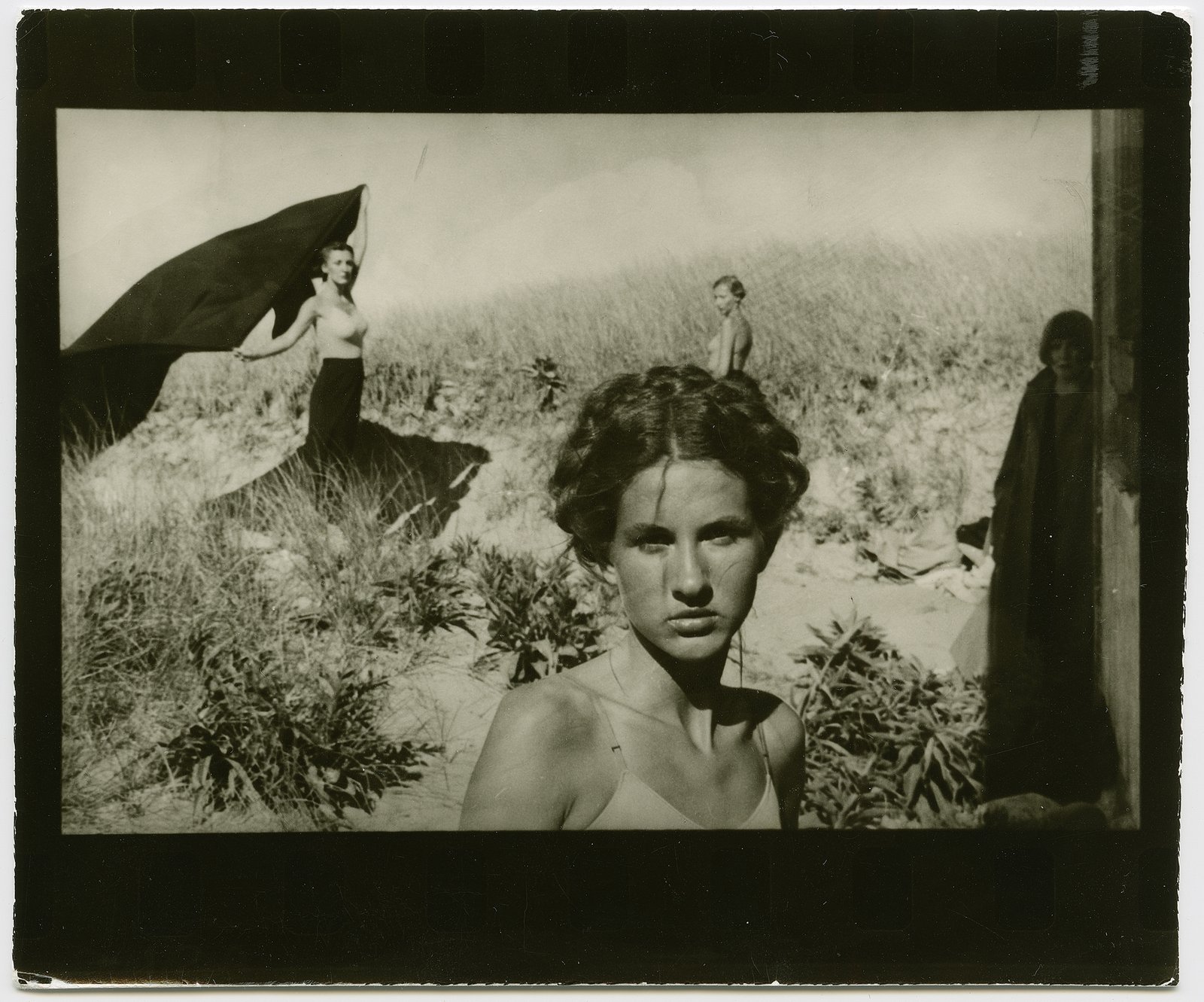
Sometimes the film's border stays on the print itself. In one image from the 1976 〈Block Island〉 series, included in Moderna Museet's press materials, a thick black border surrounds the photograph. Print past the edge of the frame on the negative, and you get a border like this. Anyone who shoots film will know the look.
Brown paper and T-pins
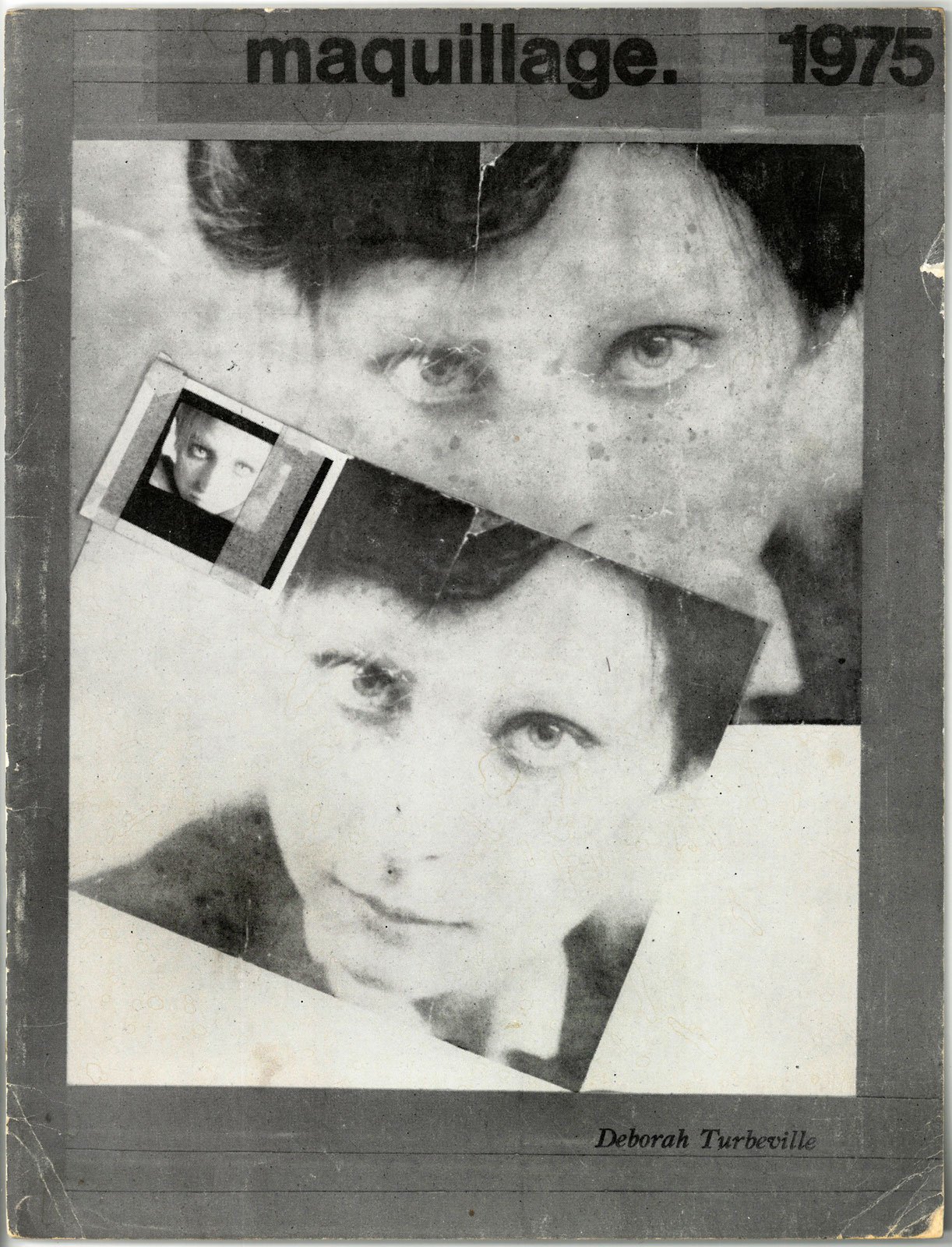
〈Maquillage〉, from 1975, is an imaginary magazine Turbeville made. The Korea Herald described it as a fashion magazine with nothing to sell, assembled from torn photographs and scraps of handwriting. In the same year 〈Bathhouse〉 ran in 〈Vogue〉, Turbeville also put together a personal magazine.
The later 〈Passport〉 is a series of collages based on an unpublished novel Turbeville began writing in the 1980s. According to Design+, the series runs to more than 130 pieces, and about 20 originals are on view in this exhibition. Huis Marseille reports that the novel was first titled 〈A Strange Tale Concerning Ivana P.〉 and later became 〈Passport: Concerning the Disappearance of Alix P.〉. It follows Alix, a designer who has just shown a collection to Paris high society, as the pressures of the fashion world wear the designer down. The novel is both autobiography and satire, drawn from what Turbeville went through in fashion.
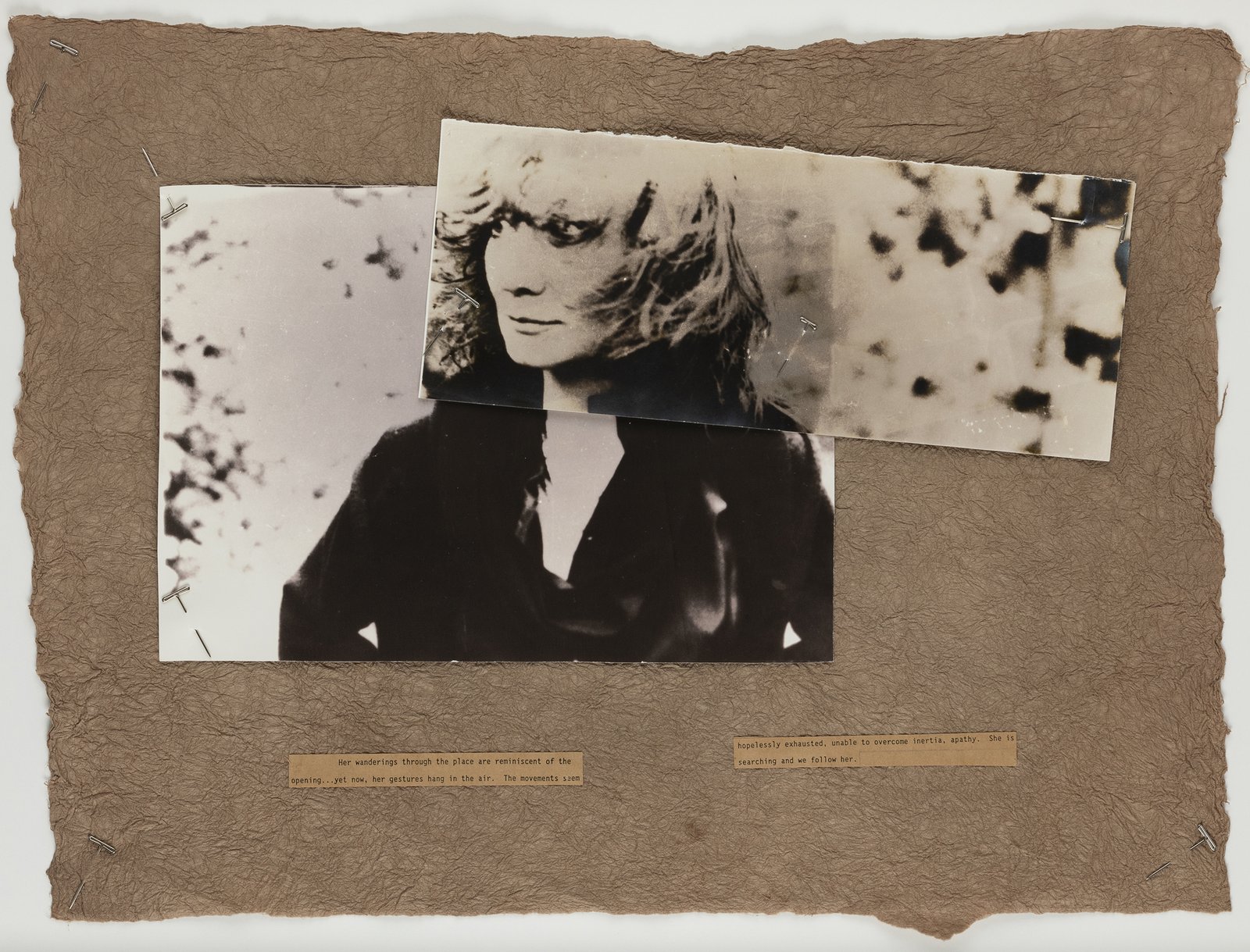
According to Huis Marseille, toward the end of the story, photographs used earlier were brought back and pinned to wrapping paper. Moderna Museet writes that Turbeville also nailed large prints directly to walls covered in wrapping paper. Along with the photographs, the paper, pins, tape and even nails became part of the work.
Frames hung over paper
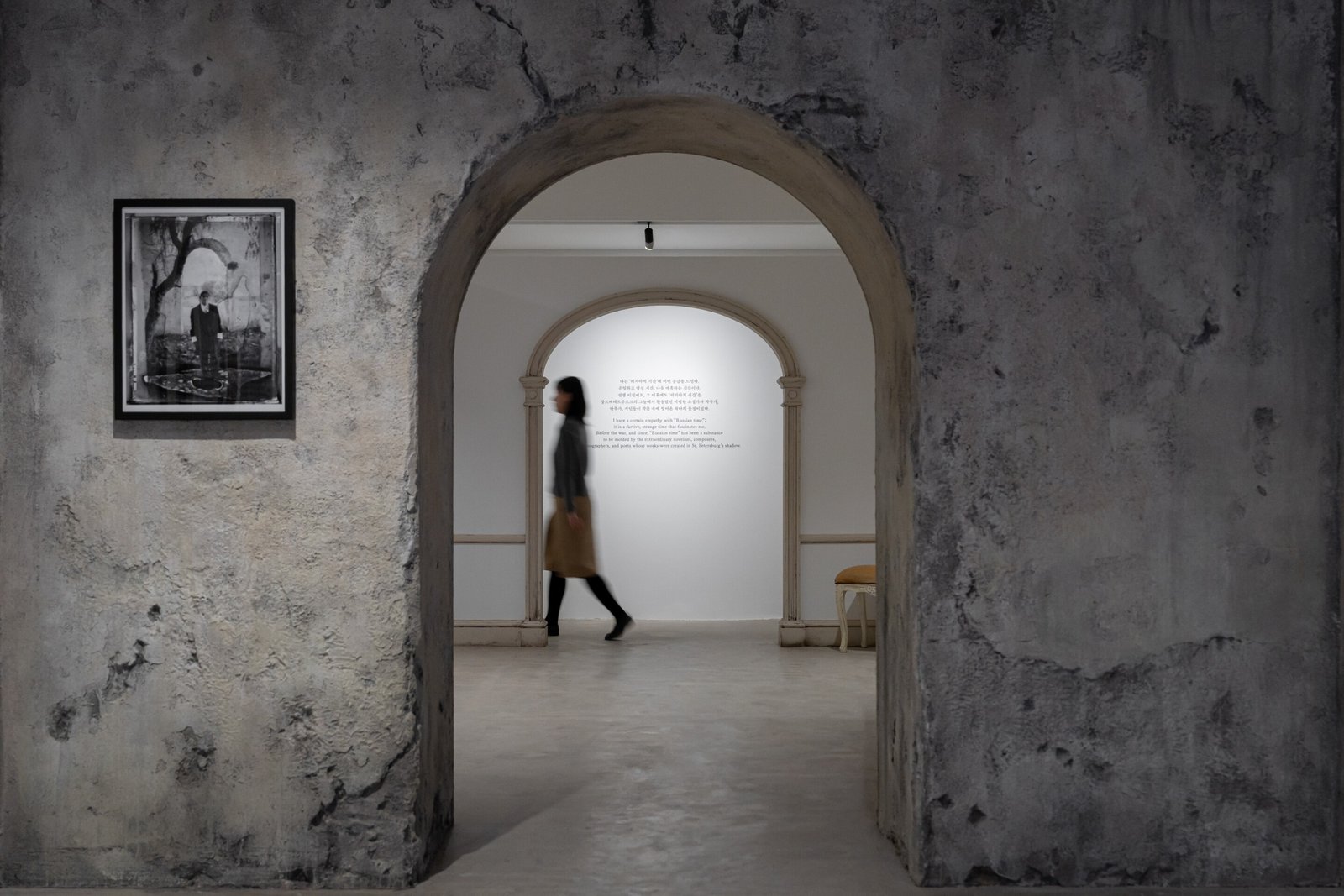
How did Piknic design the galleries? According to Design+, the spatial design is by film production designer Yoon Sung-hye. Old door frames, arches that look half collapsed and devices that blur the line of sight call to mind the worn places in Turbeville's photographs. To bring out the texture of the paper, the 〈Passport〉 originals are hung with their frames mounted over paper. A separate room plays a video of the scanned images overlaid with translated text, and Erik Satie's early piano pieces play softly through the galleries.
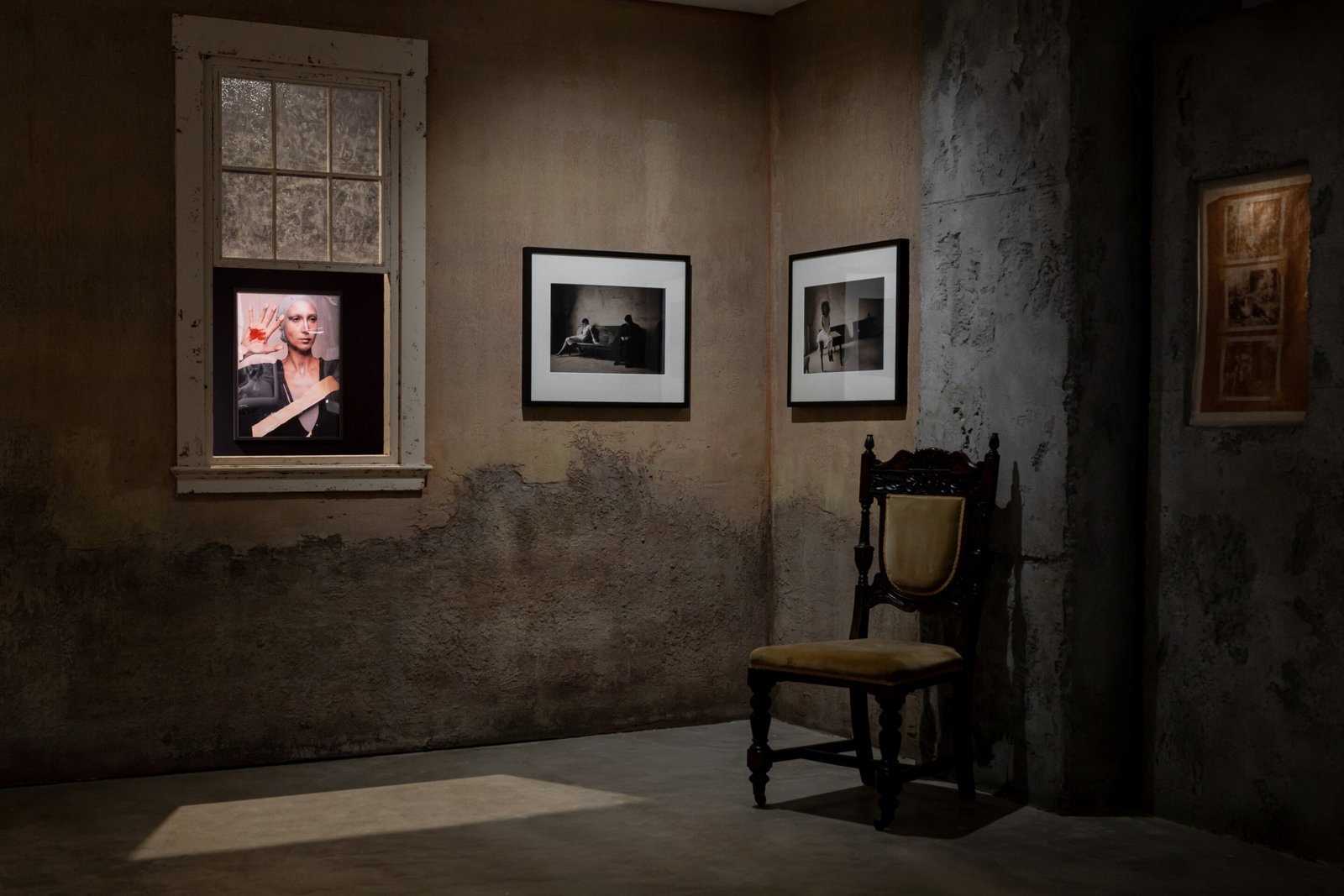
Seen on a monitor, work like this loses a lot. How thick the tape is, how deep the pins went into the paper, which way the paper was crumpled: an image file does not capture these well. The exhibition has 102 originals, vintage prints and original collages. Another 88 prints newly made in New York join them. How much of Turbeville's handwork carried over into the new prints? A scratch on a negative can survive a fresh print, but the marks of tearing and burning exist only on the one sheet that was torn or burned. Comparing the originals with the new prints is one way to see this show.
Contact sheets in the drawer
The drawers of people who shoot film usually fill up with contact sheets, test prints and frames pushed aside because they didn't quite work. Turbeville brought even contact sheets and notes into the work. There's no need to go as far as scratching your negatives. But this winter, why not take out prints from past rolls and lay them out on a single sheet of paper? As you decide which frames to paste down and which to leave out, you may find a different way to use a single photograph.
Visitor information
- Venue Piknic, 30 Toegye-ro 6ga-gil, Jung-gu, Seoul
- Dates Friday, October 23, 2026, to Sunday, February 28, 2027
- Hours Tuesday to Sunday, 10:00 to 18:00; last entry 17:00
- Closed Mondays
- Admission KRW 15,000 for adults, KRW 10,000 for teens and children (as reported by Aju Business Daily)
- Booking Naver, 29CM, Kakao or on site (per Piknic's website) · Naver Booking ↗ · Piknic exhibition page ↗
- Scale About 200 works: 102 originals (vintage prints and original collages) and 88 prints newly made in New York
- Credits Organized by Mokmok Cultural Foundation (목목문화재단) and GLINT, in collaboration with MUUS Collection
- Contact 02-318-3233
Admission prices are as reported by Aju Business Daily (Oct. 22, 2026). We recommend checking the booking page once more before you buy tickets.